🇯🇵 日本語版はこちら: 日本語で読む
Tuesday, July 14, 2026. Celebrity Millennium departs Tokyo and heads south into Suruga Bay, arriving at Shimizu Port’s Hinode Pier at 08:00. All aboard is at 19:00, with Osaka as the next port of call.
While the scheduled time in port is 11 hours, once you factor in disembarkation and re-boarding, you’ll realistically have around 9 to 10 hours to explore ashore. Even so, that’s more than enough time to take in everything Shimizu and Shizuoka have to offer — a view of Mt. Fuji framed by the iconic pine groves of Miho no Matsubara (a UNESCO World Heritage Site), the nationally treasured Kunozan Toshogu Shrine with its deep connections to Tokugawa Ieyasu, the sweeping panoramas of Nihondaira Yume Terrace overlooking Suruga Bay and Mt. Fuji, fresh tuna bowls and seafood straight from the port, and the warm, lived-in character of a harbor town shaped by legends like Shimizu Jirocho and beloved anime character Chibi Maruko-chan.
This page is your complete local guide to making the most of your shore day on July 14, 2026. Fresh from Tokyo, here’s everything you need to know about what to see, what to eat, and how to spend your day in Shimizu — told from a local perspective.
About the Author
Shimizu Port Cruise Guide — Site Operator
Based in Shizuoka City. I plan and run the “Shimizu Cruise Festival“, an event at Shimizu Port where visitors from Japan and abroad mingle with the local community, and I work on other projects that connect cruise travelers with local people.
Through my interactions with cruise travelers and local residents, I’ve come to realize that enjoying a limited port call is not just about deciding where to go. What really matters is concrete, up-to-date information: How long does it take to get there? Can I visit without a reservation? Will it be open that day?
On this site, I introduce access routes from Shimizu Port, sightseeing spots, events, restaurants, and model itineraries in an easy-to-follow way, from the perspective of someone active on the ground.
My goal is to bring you the kind of real, local information about Shimizu and Shizuoka that guidebooks alone can’t offer, and to help make your day in port an even more enjoyable and memorable one.
- 1. Shore Day Basics
- 2. Weather & What to Wear on July 14, 2026
- 3. Transportation Guide: From Shimizu Port to Town
- 4. Recommended Full-Day Itinerary: "The Shizuoka Grand Tour (Nihondaira, Toshogu, Miho & More)"
- 5. Local Events on July 14, 2026
- 6. Must-Try Food & Drink in Shimizu and Shizuoka
- 7. Practical Information for a Smooth Shore Day
- 8. Getting Back to the Ship
- 9. About Celebrity Millennium
- More Celebrity Millennium Calls at Shimizu Port
1. Shore Day Basics
Here’s a quick overview of the key details for July 14, 2026.
| Item | Details |
|---|---|
| Shore Day | Tuesday, July 14, 2026 |
| Arrival | 08:00 |
| Departure | 19:00 |
| Scheduled Time in Port | Approx. 11 hours |
| Realistic Sightseeing Time | Approx. 9–10 hours |
| Berth | Shimizu Port, Hinode Pier |
| Previous Port | Tokyo |
| Next Port | Osaka |
July 14 falls right in the heart of the Japanese summer. The Shimizu Port Festival (Shimizu Minato Matsuri) is traditionally held in late July to early August each year, so the 14th lands just before the festival season kicks off — but the port area is already buzzing with summertime energy, and the coastal scenery is at its most vibrant. July is also when many summer festivals and fireworks displays take place across Shizuoka Prefecture. We recommend checking for the latest event listings as the date approaches. With daytime temperatures running high, staying hydrated and taking precautions against heat exhaustion should be a key part of your planning.
2. Weather & What to Wear on July 14, 2026
July in Shimizu means full-on summer. Daytime highs regularly reach around 30°C (86°F), and even nighttime temperatures rarely dip below 23–24°C (73–75°F), making for hot, humid conditions throughout the day. The waterfront around Shimizu Port gets strong direct sunlight, which can make it feel even warmer than the thermometer suggests. July also marks the end of the rainy season, so overcast skies aren’t unusual — but don’t be fooled by clouds, as the humidity stays high regardless and you’ll still work up a sweat.
What to Wear: Lightweight, short-sleeved or quick-dry shirts are your best bet. For outdoor spots like Miho no Matsubara and Nihondaira, a hat, sunglasses, and sunscreen are essential. Since you’ll be doing a fair amount of walking, choose comfortable, cushioned footwear. Tuck a compact folding umbrella or a lightweight rain poncho into your bag — summer downpours can arrive without much warning. Stay hydrated throughout the day, and stock up on bottled water at convenience stores or Dream Plaza.
Please note that this article was written a few days before the shore date, so precise forecasts for the day were not yet available at the time of writing. Accurate weather forecasts typically become available about three days out, so be sure to check an up-to-date forecast before you head ashore. On the morning of your visit, a quick search for “Shimizu, Shizuoka weather” will bring up an English-language forecast with no trouble.
3. Transportation Guide: From Shimizu Port to Town
This section walks through each way of getting around from Shimizu Port, covering fare structure, payment, and frequency. With 11 hours between the 8:00 arrival and 19:00 departure, a nimble taxi is our recommendation for anyone who wants full control over how the day unfolds.
🚕 Taxi (the most flexible option, and our recommendation)
The greatest strength of a taxi is stitching Nihondaira, Kunozan Toshogu Shrine, and other hard-to-reach places into one smooth loop. The recommended model route in this article, the “Shizuoka Full Course (Nihondaira, Toshogu, Miho, and local food)”, is built around taxi travel too. Split the bill and the cost per person drops considerably.
- 【Where to board】Taxis gather at Hinode Wharf to meet cruise arrivals. If none are visible, have the tourist information desk in the port terminal call one (Shizutetsu Taxi dispatch center: 054-281-5111)
- 【How fares work】Metered fares start at ¥700 for the first 1.17 km, rising ¥100 per 285 m after that. The meter keeps counting on time while stopped at lights or in traffic. Feel free to ask for an estimated fare before you get in
- 【Charter option】Time-based charters are ¥7,700 per hour for a standard car. Sightseeing taxi plans (Shizutetsu Taxi) begin at ¥30,800 for 4 hours, about ¥7,700 per person when four ride together. Hand over your list of must-see spots and work out the order with the driver
- 【Payment】Cash and credit cards are dependable. IC card and QR payment acceptance depends on the vehicle, so mention it before boarding if you intend to use one. No tipping required
- 【Language】Most drivers speak only Japanese, but showing this article’s spot names (Japanese text included) on your phone communicates just fine
🚌 Free Shuttle Bus (the little-known link between the port and Shimizu Station)
S-Pulse Dream Plaza runs this free loop bus, linking Dream Plaza, Shizutetsu Shin-Shimizu Station, and the Minato Exit of JR Shimizu Station in about 10 minutes.
- 【Fare】Free, no purchase necessary
- 【Frequency】Every 15 to 20 minutes
- 【When to use it】For trips toward JR Shimizu Station and Shin-Shimizu Station. It shortcuts a walk of more than 20 minutes, departing from Dream Plaza right next to the wharf
⛴ Water Bus (crossing the harbor with Mt. Fuji in view)
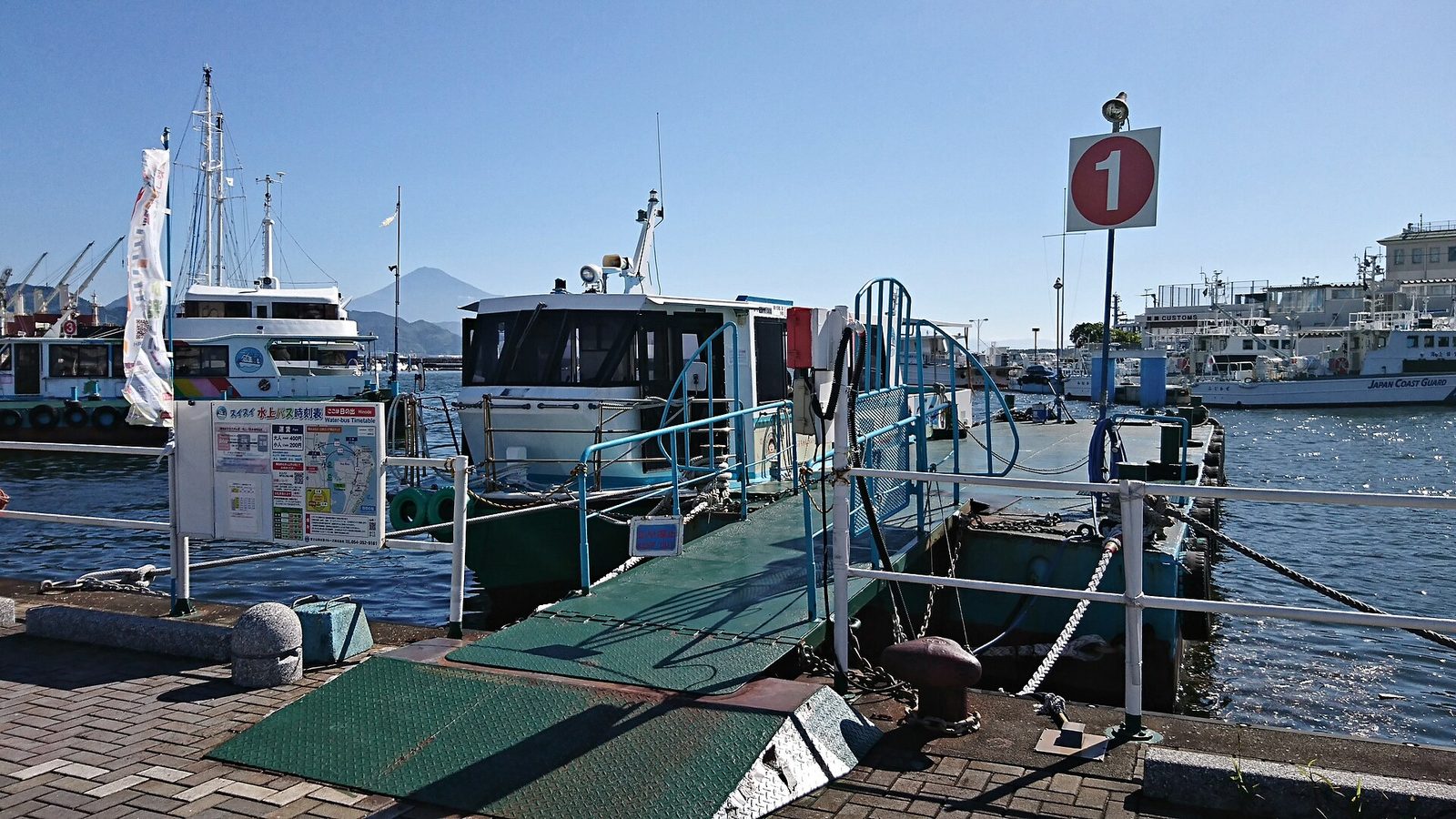
Small boats cross from the Hinode pier (in front of Dream Plaza) to the Miho side and to Ejiri (near the Kashi-no-Ichi fish market). A short voyage in the July sea breeze is a piece of Shimizu sightseeing in itself.
- 【How fares work】A flat fare per section: ¥1,000 for adults, ¥500 for elementary school children. Hinode to Miho takes about 15 minutes; Hinode to Ejiri, about 10 minutes
- 【Frequency】7 sailings a day. No reservations; boarding is in order of arrival
- 【How to buy tickets】Buy tickets at the pier
- 【About cancellations】Cancellations are rare on this in-harbor route, but boats may stop running in severe weather such as typhoons. Confirm the day’s operation at the pier or by phone (054-353-2222)
🚏 Local Bus (the standard route to Miho: Shizutetsu Justline)
Going to Miho no Matsubara by public transport means the Miho Yamanote Line: ¥440 and about 25 minutes from Shimizu Ekimae to Miho Matsubara Iriguchi.
- 【Frequency】About 3 to 4 buses per hour in the daytime
- 【How to ride】Enter by the rear door and pay at the front fare box when leaving. Nationwide IC cards such as Suica and ICOCA need only a tap on boarding and another on alighting
- 【Paying in cash】The onboard change machine takes coins and ¥1,000 bills only. If you carry only larger bills, get change at a convenience store before riding
- 【Note】From the port to the Shimizu Ekimae bus terminal, you will need the free shuttle bus or a walk
🚃 Train (to central Shizuoka)
Your choice for excursions to the Shizuoka Station area, with the oden alley Aoba Yokocho and Sumpu Castle Park.
- 【JR Tokaido Line】Shimizu to Shizuoka: ¥240, about 12 minutes, with 3 to 4 trains an hour during the day
- 【Shizuoka Railway (Shizutetsu Line)】Shin-Shimizu to Shin-Shizuoka: ¥350, about 23 minutes. Departures about every 8 minutes make timetables unnecessary
- 【Payment】Both lines take IC cards such as Suica and ICOCA. Tap-to-ride with credit cards is not available, so use an IC card or buy a paper ticket with cash
- 【From the port to the stations】The free shuttle bus is the easy way to Shimizu and Shin-Shimizu stations
🚶 On Foot (fine for the area right around the port)
- S-Pulse Dream Plaza: right next to the wharf (a 1 to 3 minute walk)
- Shimizu Fish Market “Kashi-no-Ichi”: about 1.3 km, a 15 to 20 minute walk. Or take the water bus from Hinode to Ejiri (about 10 minutes) and land directly in front of the market
- JR Shimizu Station: about 1.5 km, a 20 to 25 minute walk. The free shuttle bus is recommended
- Shizutetsu Shin-Shimizu Station: about 1 km, roughly 15 minutes on foot
4. Recommended Full-Day Itinerary: “The Shizuoka Grand Tour (Nihondaira, Toshogu, Miho & More)”
“With 9 to 10 hours, where do I even start?” If you’ve got a full day in port, you probably want to see the very best of Shimizu and Shizuoka — and that’s exactly what this itinerary delivers. It covers the 360-degree panorama at Nihondaira → the nationally treasured Kunozan Toshogu Shrine → a fresh tuna bowl for lunch → the UNESCO-listed Miho no Matsubara → souvenir shopping back at the port — the greatest hits of Shizuoka, all in one day. A charter taxi is the most efficient way to connect all five stops smoothly.
The early 08:00 arrival works strongly in your favor here: you can get moving while the morning is still relatively cool. July afternoons in Shizuoka can get very hot, so this plan front-loads the outdoor sightseeing in the morning and builds in some shade and rest time later in the day.
Suggested Schedule
| Time | Stop | What to Do | Duration |
|---|---|---|---|
| 08:30 | Shimizu Port, Hinode Pier | Disembark & arrange taxi at tourist information center | 30 min |
| 09:00 | En Route | Taxi to Nihondaira | Approx. 30 min |
| 09:30–10:30 | Nihondaira / Nihondaira Yume Terrace | Take in the 360° views of Mt. Fuji and Suruga Bay | 60 min |
| 10:30 | En Route | Nihondaira Ropeway down to Kunozan Toshogu | Approx. 5 min |
| 10:35–12:05 | Kunozan Toshogu Shrine | Explore the nationally designated shrine buildings and museum | 90 min |
| 12:05 | En Route | Taxi to Kashi no Ichi | Approx. 20 min |
| 12:25–13:25 | Shimizu Fish Market “Kashi no Ichi” | Tuna bowl lunch at Maguro-kan + browse souvenirs | 60 min |
| 13:25 | En Route | Water bus or local bus to Miho no Matsubara | Approx. 30–35 min |
| 14:00–15:30 | Miho no Matsubara | Walk the Kami no Michi path, see the Hagoromo Pine, and take in views of Mt. Fuji | 90 min |
| 15:30 | En Route | Water bus or local bus back to Shimizu Port area | Approx. 30–35 min |
| 16:05–17:05 | Espaluce Dream Plaza | Chibi Maruko-chan Land + souvenir shopping | 60 min |
| 17:05 | Return to Ship | Walk to Hinode Pier (approx. 5 min) + check in for boarding | — |
| 18:00 | Shimizu Port, Hinode Pier | Re-board (aim to return at least 60 minutes before the 19:00 departure) | — |
Estimated Budget: Approx. ¥12,000–15,000 per person (including taxi, admission fees, lunch, and water bus)
Nihondaira / Nihondaira Yume Terrace
Perched at 307 meters above sea level, Nihondaira Yume Terrace is Shizuoka’s premier viewpoint, offering a full 360-degree panorama. On a clear day, Mt. Fuji, Suruga Bay, the Southern Alps, and Miho no Matsubara are all simultaneously visible — a sight that genuinely stops you in your tracks. By visiting in the morning as this itinerary suggests, you have the best chance of clear skies before clouds build up later in the day. In July, Mt. Fuji won’t have its snow cap, but the mountain’s distinctive silhouette remains clearly visible. Best of all, admission to the terrace is free.
Kunozan Toshogu Shrine
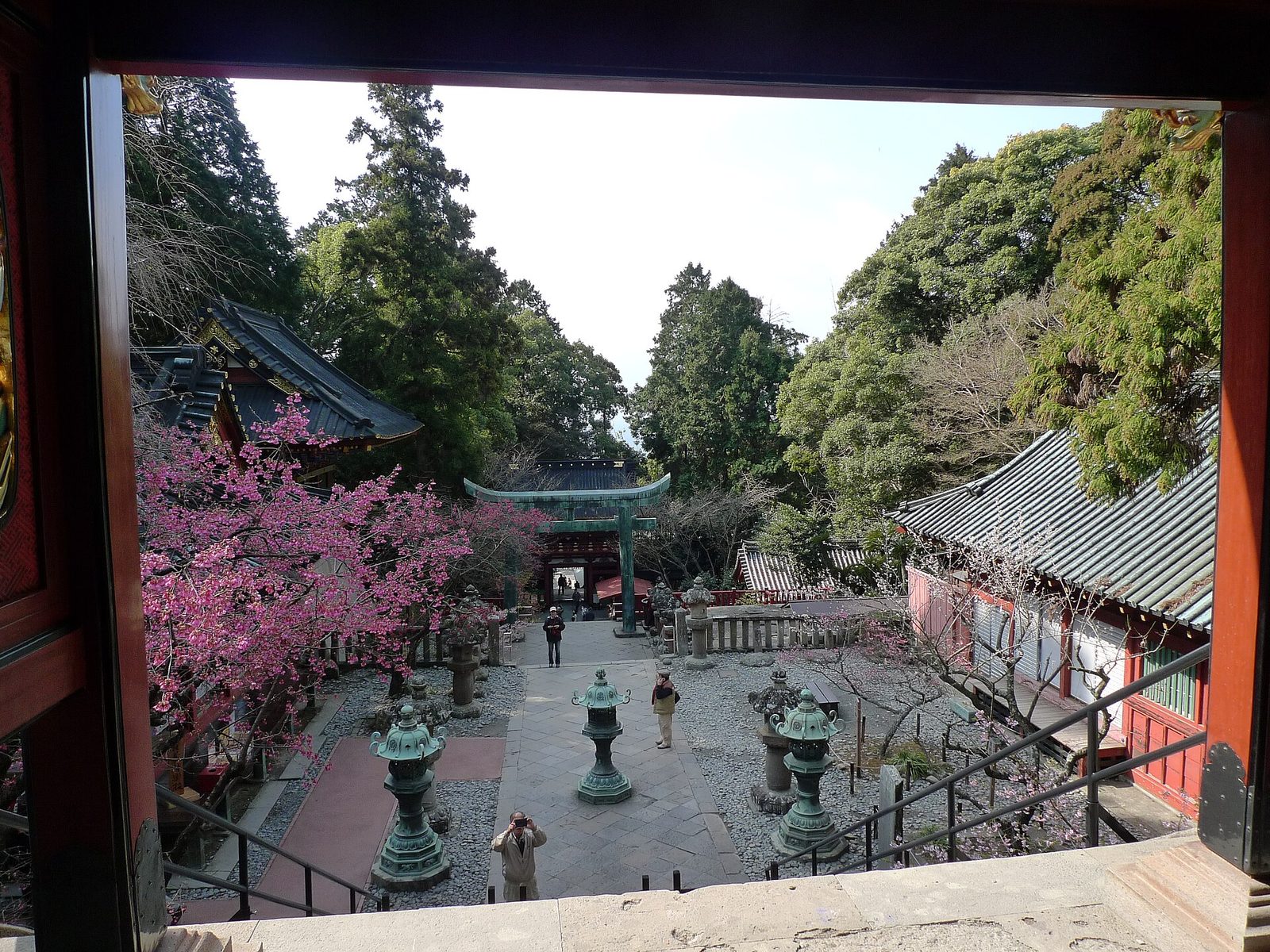
This is the oldest Toshogu shrine in Japan, dedicated to Tokugawa Ieyasu — the warlord who unified Japan and founded the Edo shogunate. The main shrine buildings are designated National Treasures, and their vivid polychrome decoration is considered the original blueprint for the more famous Nikko Toshogu. Getting here is wonderfully easy: just a short 5-minute ropeway ride down from Nihondaira. The on-site museum houses a remarkable collection of armor, documents, and artifacts associated with Ieyasu. A combined ticket for the shrine buildings (¥700) and museum (¥1,200) is the best-value option.
Shimizu Fish Market “Kashi no Ichi”
This is Shimizu’s working fish market, opened up for the public, spread across two buildings: Maguro-kan (Tuna Hall) and Ichiba-kan (Market Hall). Shimizu Port is one of Japan’s leading tuna-landing ports, and the freshness of the fish here is second to none. The menu spans tuna bowls, sashimi platters, chopped tuna (tataki), and much more. Following renovations completed in 2025, the market now offers English menus and accepts card payments, making it easy for international visitors to enjoy. There’s also a great selection of packaged seafood for bringing home as souvenirs.
Miho no Matsubara
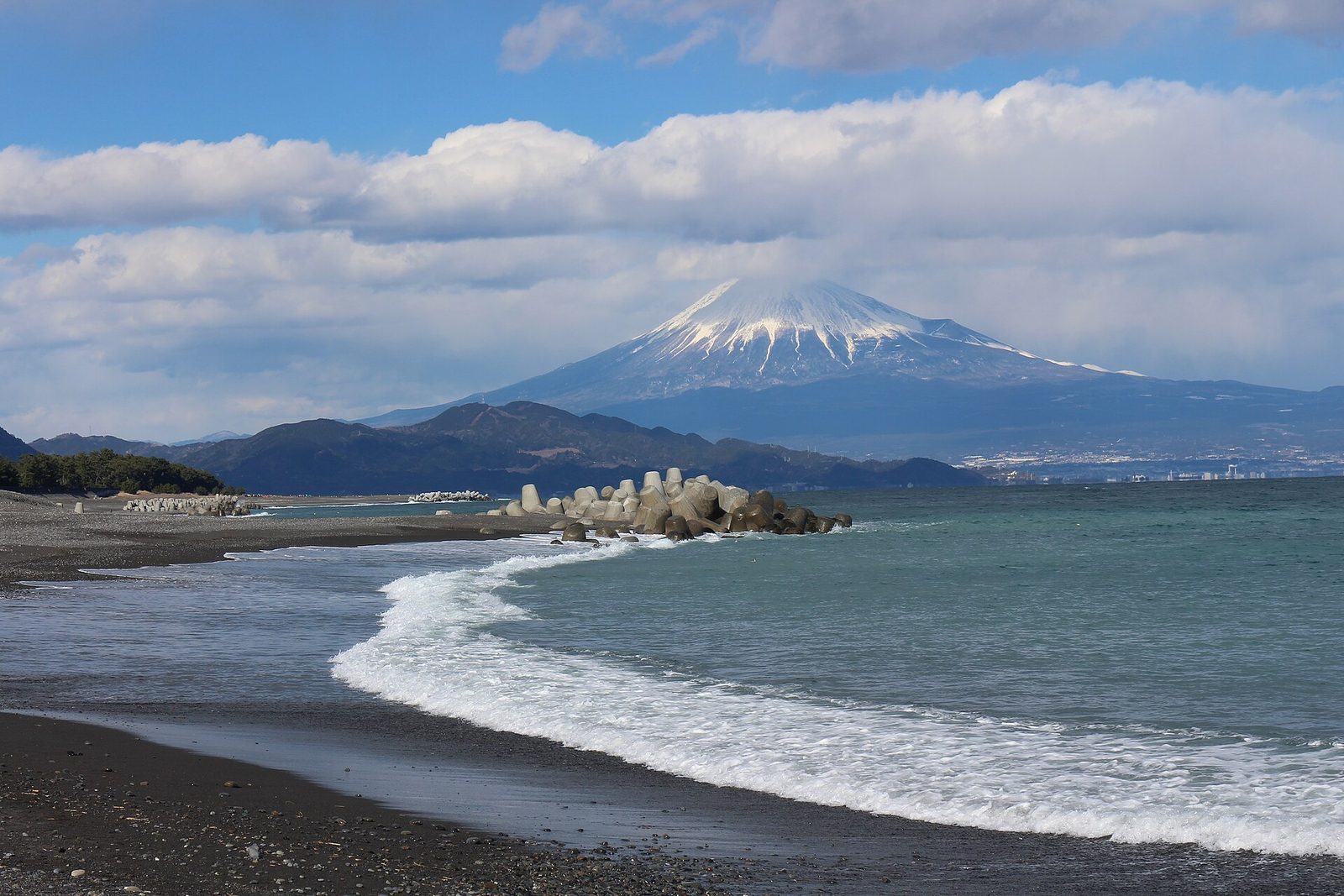
A breathtaking UNESCO World Cultural Heritage Site where roughly 30,000 pine trees frame a picture-perfect view of Mt. Fuji across Suruga Bay. The legendary Hagoromo Pine — where a celestial maiden is said to have hung her feathered robe — and the serene, sacred path known as Kami no Michi are highlights you won’t want to miss. The combination of dappled light filtering through the pines, the sound of waves breaking on the shore, and the distant silhouette of Mt. Fuji is unlike anything else. In summer, the sun is strong, so bring a hat and plenty of water. The visitor center “Mihoshiruibe” distributes multilingual pamphlets for guests.
Espaluce Dream Plaza
A large waterfront complex right next to the port and the perfect final stop before heading back to the ship. Chibi Maruko-chan Land — themed around the beloved anime set in Shimizu — is a delight for visitors of all ages. Shimizu Sushi Yokocho is a good spot for a late snack or a lighter meal, and there’s an excellent range of Shizuoka souvenirs including wasabi products and local green tea. Being an indoor venue, it’s also a welcome refuge from the summer heat — a fitting way to wind down at the end of a full day.
Operating Status on Tuesday, July 14, 2026
- ✅ Nihondaira Yume Terrace: Open on Tuesdays (09:00–17:00)
- ✅ Kunozan Toshogu Shrine: No regular closing day; open daily (09:00–17:00)
- ✅ Shimizu Fish Market “Kashi no Ichi” (Maguro-kan & Ichiba-kan): Closed on Wednesdays — so Tuesday the 14th is a regular business day
- ✅ Miho no Matsubara: Open at all times, free of charge; visitor center “Mihoshiruibe” open 09:00–16:30
- ✅ Espaluce Dream Plaza: Shops open 10:00–20:00; restaurants open 11:00–21:00
⚠️ A note on summer crowds: July is peak tourist season, and both Nihondaira Yume Terrace and Miho no Matsubara tend to get busier as the afternoon goes on. This itinerary addresses that by scheduling Nihondaira and Toshogu in the morning, helping you beat both the heat and the crowds. The water bus may be cancelled due to wind or weather conditions — always check the day’s service status at the tourist information center on the morning of your visit. If it’s not running, local buses (¥470, approx. 25 minutes) can take you to the Miho area instead.
5. Local Events on July 14, 2026
Mid-July is very much the prelude to the main summer festival season in Shimizu and Shizuoka. The Shimizu Port Festival and most major neighborhood summer festivals tend to be concentrated in late July through early August, though local events and fireworks displays do sometimes take place on weekends and public holidays in mid-July as well.
As of the time of writing, no confirmed events specifically on Tuesday, July 14, 2026 have been publicly announced. For the latest local event information, we recommend the following resources:
- Shizuoka City Tourism website (Shizuoka Kanko Station)
- Shimizu Tourist Information Center (inside the Shimizu Port Terminal — right after disembarking)
- Japanese travel sites such as Jalan and Rurubu (available in both Japanese and English)
The staff at the tourist information center speak English, so don’t hesitate to ask: “Are there any local events today?”
6. Must-Try Food & Drink in Shimizu and Shizuoka
Shimizu and Shizuoka are among Japan’s finest food destinations. Here are the local specialties you won’t want to leave without trying.
| Dish | Where to Find It | Price Range | What Makes It Special |
|---|---|---|---|
| Tuna Bowl (Maguro-don) | Kashi no Ichi, Maguro-kan | ¥1,000–2,500 | Ultra-fresh tuna landed at Shimizu Port. English menu available. |
| Shimizu Tuna Sushi | Shimizu Sushi Yokocho (Dream Plaza) | ¥1,500–4,000 | 5 min walk from the port. Don’t miss the sakura shrimp gunkan. |
| Whitebait Bowl (Shirasu-don) | Kashi no Ichi & restaurants around the city | ¥1,000–2,000 | Summer is peak season for fresh raw whitebait. Delicate and sweet. |
| Shizuoka Oden | Aoba Yokocho (central Shizuoka City) | ¥500–1,500 | Dark broth, black fish cake, and dried seaweed powder — Shizuoka style. Primarily an evening spot. |
| Wasabi Dishes | Throughout Shimizu & Shizuoka | ¥300–3,000 | Japan’s top wasabi-producing region. Wasabi soft-serve ice cream is a must-try. |
| Sakura Shrimp Kakiage (Tempura Fritter) | Yui Fishing Port area (approx. 25 min by car) | ¥800–1,500 | Autumn fishing season runs October onwards; July is off-season, but some city restaurants still serve it. |
| Seafood Bowl / Chopped Tuna (Tataki) | Ichiba-kan, Kashi no Ichi | ¥500–2,000 | Takeaway options available. Sakura shrimp shumai (dumplings) also highly recommended. |
One thing especially worth highlighting for a July visit is fresh raw whitebait (nama shirasu). Caught in Suruga Bay, Shizuoka’s whitebait is renowned across Japan for its translucent shimmer and delicate sweetness. Since raw whitebait can only be eaten on the day it’s caught, it’s a rare and fleeting treat — look for it on the blackboard or menu at Kashi no Ichi or Shimizu Sushi Yokocho. Availability depends on that morning’s catch, so it’s not guaranteed, but it’s absolutely worth checking. If raw whitebait isn’t available, cooked釜揚げ (kama-age) whitebait is a delicious alternative available year-round. When you’re in Shimizu, don’t stop at just the tuna — make sure you try the whitebait too.
7. Practical Information for a Smooth Shore Day
Wi-Fi
Free Wi-Fi is available inside the Shimizu Port Terminal, so you can get connected the moment you step ashore. Espaluce Dream Plaza also offers free Wi-Fi throughout the complex. Major convenience store chains (7-Eleven, Lawson, and FamilyMart) across the city offer a national free Wi-Fi service. For reliable connectivity all day long, a prepaid SIM card for use in Japan — available at major airports — is a convenient option worth picking up before your visit.
Payment
Cash is still king at many places in Japan, particularly at smaller restaurants, taxis, and market stalls — cash only is common. Larger venues like Espaluce Dream Plaza and Kashi no Ichi typically accept credit cards (Visa and Mastercard are your best options; American Express and Diners Club are not always accepted). There is a 7-Bank ATM at a convenience store near the port that accepts overseas cards for cash withdrawals in yen. We recommend carrying ¥5,000–10,000 per person in cash to be on the safe side.
IC Cards
Local buses and JR trains accept IC cards such as Suica and ICOCA, which can be purchased and topped up at convenience stores near Shimizu Station or at the JR Shimizu Station ticket office. Cash payment is also accepted, but note that some bus services do not give change, so having the right coins helps.
Language Support
The tourist information centers at Shimizu Port Terminal and Shimizu Station have English-speaking staff. English menus and some English-speaking staff are also available at Espaluce Dream Plaza and Kashi no Ichi. The visitor center “Mihoshiruibe” at Miho no Matsubara provides multilingual pamphlets. Most taxi drivers speak Japanese only, but Google Translate’s camera and conversation features will handle the vast majority of communication situations without any trouble.
Tourist Information Centers
- Inside Shimizu Port Passenger Terminal — right at the pier; taxi arrangements, maps, and English assistance available
- Shimizu Station Tourist Information Center — about 15 minutes’ walk from the port; JR timetables, bus stop guidance, and more
Emergency Contacts
| Purpose | Number |
|---|---|
| Police | 110 |
| Ambulance / Fire | 119 |
| Shizuoka City Tourism (English) | 054-221-1173 |
| Taxi (Shizutetsu Taxi) | 054-285-1212 |
8. Getting Back to the Ship
Today’s departure is at 19:00. To ensure a smooth re-boarding, please make sure you are back at Shimizu Port’s Hinode Pier by 18:30 at the latest (30 minutes before sailing). Given that check-in can sometimes take a little time, we recommend aiming to be back at the pier by 18:00–18:15 if at all possible.
If you’re not sure how to get back, search “Shimizu Port Hinode Pier” or “清水港 日の出埠頭” on Google Maps — it will guide you from wherever you are in the city. When taking a taxi, tell the driver “Hinode Pier” (日の出埠頭) or simply show them those words on your phone screen. If you’re returning from a spot where taxis are hard to hail — such as Miho no Matsubara — we recommend asking staff at the local visitor center or a nearby shop to call one for you in advance. Don’t leave it too late.
9. About Celebrity Millennium
Celebrity Millennium is a large ocean-going cruise ship operated by Celebrity Cruises. With a gross tonnage of 91,011 tons, she launched in 2000 as the flagship of the Millennium Class and has been highly regarded ever since. Celebrity Cruises is part of the Royal Caribbean Group and is positioned as a “premium” cruise line, known worldwide for its refined interiors and consistently excellent service.
On board, dining options are a real highlight. The main dining room, “The Metropolitan,” offers an impressive multi-course dinner experience that is signature to this ship. For something more relaxed, the “Oceanview Cafe” serves up a wide variety of options in a buffee-style setting. In terms of entertainment, the “Celebrity Theater” — the ship’s main showroom — features Broadway-style productions with acrobatics and musical numbers every evening. The “Conservatory,” filled with fresh flowers and lush plants, is one of the ship’s most iconic spaces: a tranquil retreat ideal for a quiet afternoon with a good book. As you sail from Tokyo to Shimizu and onward to Osaka, we hope you enjoy every moment of this journey around Japan — both ashore and at sea.
Tokyo’s dazzling cityscape is now a cherished memory, and today Shimizu offers something entirely different: mountains, ocean, and centuries of history all wrapped into one. Next up, the vibrant streets of Osaka await. This voyage connecting three of Japan’s greatest cities is a rare and remarkable journey — each port a world unto itself. We hope your time in Shimizu becomes one of the highlights of this voyage.
良い旅を。Have a wonderful voyage.
More Celebrity Millennium Calls at Shimizu Port
Guides for this ship’s other port calls: