Thursday, May 7, 2026. After departing Kobe and sailing through the Seto Inland Sea into the Pacific Ocean, Azamara Pursuit arrives at Shimizu Port’s Hinode Pier at 10:30. Departure is the same day at 19:00, bound for Tokyo.
🇯🇵 日本語版はこちら: 日本語で読む
While the scheduled port time is 8.5 hours, once you account for disembarkation and re-boarding, you’ll realistically have around 7 hours to explore ashore. Even so, that’s more than enough time to experience the very best of Shimizu and Shizuoka in a single day — from a breathtaking panoramic viewpoint overlooking Mt. Fuji, to a National Treasure shrine with ties to Tokugawa Ieyasu, a UNESCO World Heritage pine grove, and a fresh tuna bowl right at the harbor.
This page is your complete day guide for making the most of your May 7 port call. Fresh from Kobe, here’s everything you need to know about what to see, what to eat, and how to spend your time in Shimizu — told from a local perspective.
About the Author
Shimizu Port Cruise Guide — Site Operator
Based in Shizuoka City. I plan and run the “Shimizu Cruise Festival“, an event at Shimizu Port where visitors from Japan and abroad mingle with the local community, and I work on other projects that connect cruise travelers with local people.
Through my interactions with cruise travelers and local residents, I’ve come to realize that enjoying a limited port call is not just about deciding where to go. What really matters is concrete, up-to-date information: How long does it take to get there? Can I visit without a reservation? Will it be open that day?
On this site, I introduce access routes from Shimizu Port, sightseeing spots, events, restaurants, and model itineraries in an easy-to-follow way, from the perspective of someone active on the ground.
My goal is to bring you the kind of real, local information about Shimizu and Shizuoka that guidebooks alone can’t offer, and to help make your day in port an even more enjoyable and memorable one.
- 1. Port Day Essentials
- 2. Weather & What to Wear on May 7, 2026
- 3. Transportation Options from Shimizu Port
- 4. Recommended Itinerary: The Shizuoka Full Course (Nihondaira · Toshogu · Miho · Food)
- 5. Local Events on May 7, 2026
- 6. Must-Try Food & Drink in Shimizu and Shizuoka
- 7. Practical Tips for a Smooth Day Ashore
- 8. Getting Back to the Ship
- 9. About Azamara Pursuit
- More Azamara Pursuit Calls at Shimizu Port
1. Port Day Essentials
Here’s everything you need to know about the May 7, 2026 port call at a glance.
| Item | Details |
|---|---|
| Port Date | Thursday, May 7, 2026 |
| Arrival | 10:30 |
| Departure | 19:00 |
| Scheduled Port Time | Approx. 8.5 hours |
| Practical Time Ashore | Approx. 7 hours |
| Berth | Shimizu Port, Hinode Pier |
| Previous Port | Kobe |
| Next Port | Tokyo |
May 7 falls on the Thursday immediately following Japan’s “Golden Week,” the country’s largest holiday period. In 2026, Golden Week runs from Wednesday, April 29 through Wednesday, May 6, making May 7 the first day most Japanese people return to work and school. For visitors, this timing is ideal — the post-holiday crowds have cleared, and popular attractions should be noticeably less busy than in the days prior. While cherry blossom season has passed, the fresh greenery of early summer is at its finest, and Mt. Fuji is still dusted with snow — one of the most rewarding times of year to visit Shizuoka.
May also marks the peak of the first tea harvest (shincha) season in Shizuoka, one of Japan’s foremost tea-producing regions. You’ll find new-crop green tea featured in sweets, drinks, and products throughout the port area and at local attractions — a lovely seasonal bonus on top of everything else. With the Golden Week rush behind you, this Thursday port call offers a wonderfully unhurried way to experience Shimizu’s highlights.
2. Weather & What to Wear on May 7, 2026
May is one of the most pleasant times of year to visit Shimizu. Daytime highs typically reach 20–24°C (68–75°F), with overnight lows around 15–17°C (59–63°F). Midday can feel genuinely warm, while mornings, evenings, and spots near the water tend to carry a slight chill. On clear days, Mt. Fuji stands out brilliantly against a blue sky, with the surrounding greenery making for spectacular views. Japan’s rainy season (tsuyu) doesn’t reach Shizuoka until early June, so May weather is generally stable — though a compact umbrella is worth packing, as occasional showers can catch you off guard from mid-May onward.
Layering is the way to go: start with a light shirt or blouse, and bring a thin cardigan or jacket you can easily add or remove throughout the day. Sunscreen and sunglasses are a good idea, especially at outdoor spots like Miho no Matsubara and Nihondaira where the sun can be strong. For footwear, comfortable walking shoes or sneakers are strongly recommended — you’ll be covering sandy beaches, pine-forest paths, and stone steps over the course of the day.
Please note that this article was written a few days before the port call, when precise day-of forecasts weren’t yet available. For the most accurate weather information, check closer to May 7 — reliable forecasts for the day are typically available about three days out. On the morning of your arrival, a quick search for “Shimizu, Shizuoka weather” will bring up an up-to-date English-language forecast.
3. Transportation Options from Shimizu Port
From here, we cover each mode of transport in turn: fare structure, payment methods, and how often it runs. With 8.5 hours ashore, a taxi is the strongest choice for anyone who wants to see the city without waiting around.
🚕 Taxi (the most flexible option, and our top pick)

The biggest advantage: one car covers Nihondaira, Kunozan Toshogu Shrine, and other spots that public transit struggles to reach. Shared among a group, the per-person cost is surprisingly manageable.
- 【Where to board】Taxis gather at Hinode Wharf whenever a cruise ship arrives. If you can’t spot one, the tourist information desk inside the port terminal will call one for you (Shizutetsu Taxi dispatch center: 054-281-5111)
- 【How fares work】Metered. The starting fare is ¥700 for the first 1.17 km, rising ¥100 for each 285 m after that. Time charges apply while stopped at lights or stuck in traffic. Feel free to ask for a ballpark fare before you get in
- 【Charter option】Hourly charters run ¥7,700 for a standard car. The sightseeing taxi plan (Shizutetsu Taxi) starts at ¥30,800 for 4 hours, or roughly ¥7,700 per person with four riders. If you’re following this article’s model route, the full Shizuoka course of Nihondaira, Toshogu, Miho, and local food, that 4-hour plan is just the right length. Discuss the route with your driver
- 【Payment】Cash and credit cards are reliable. Transit IC and QR payment support differs from car to car, so confirm before riding if that’s your preference. No tipping
- 【Language】Most drivers speak Japanese only, but showing the spot names from this article (with Japanese text) on your phone is all it takes
🚌 Free Shuttle Bus (links the port and Shimizu Station; a surprisingly little-known ally)

Shimizu Port has two different free buses, and they leave from different places.
1. The S-Pulse Dream Plaza free shuttle (year-round, open to everyone)

It links Dream Plaza, Shizutetsu Shin-Shimizu Station and the Minato exit of JR Shimizu Station in about 8 minutes. It leaves from the Dream Plaza bus stop next to the pier, not from Hinode Wharf itself.
- Fare: free. You don’t need to be a shopper to ride
- Frequency: every 30 minutes on weekdays (departing Dream Plaza on the hour and half hour), every 15 minutes on weekends and holidays
- First and last: first bus from Dream Plaza at 10:00, last at 22:20; first from JR Shimizu Station at 9:45
- It does not run before 10:00. On an early arrival, take a taxi or walk for your first move of the day
2. A port-day shuttle for cruise passengers (arranged by the cruise line)

On call days a free bus often leaves from directly in front of Hinode Wharf for Shin-Shimizu and JR Shimizu stations. Unlike the Dream Plaza shuttle, you board it steps from the gangway. During the Celebrity Millennium call on August 16, 2026, it was operated by Ihara Kanko (verified on site by our editors). Whether it runs, and its times and destinations, vary by call — check your ship’s daily program or ask the staff on the pier.
⛴ Water Bus (cross the harbor with Mt. Fuji in view)

Small boats depart the Hinode pier (in front of Dream Plaza) for the Miho area and for Ejiri (near the Kashi-no-Ichi fish market). The trip itself is a slice of harbor sightseeing.
- 【How fares work】A single flat rate per section: adults ¥1,000, elementary school children ¥500. Hinode to Miho takes about 15 minutes, Hinode to Ejiri about 10
- 【Frequency】7 sailings daily. No reservations; it’s first come, first served
- 【How to buy tickets】Purchase tickets at the pier
- 【About cancellations】Because the route runs inside the harbor, cancellations are uncommon, though typhoons and other rough weather can halt service. Check the day’s operations at the pier or by phone (054-353-2222)
🚏 Local Bus (the standard route to Miho: Shizutetsu Justline)
The Miho Yamanote Line is the go-to for reaching Miho no Matsubara by public transit: ¥440 and about 25 minutes from Shimizu Ekimae to Miho Matsubara Iriguchi.
- 【Frequency】About 3 to 4 buses an hour in the daytime
- 【How to ride】Board at the rear door; pay at the fare box up front as you exit. Nationwide transit IC cards such as Suica and ICOCA just need a tap on and a tap off
- 【Paying in cash】The onboard change machine accepts coins and ¥1,000 bills only. Carrying only large bills? Break them at a convenience store beforehand
- 【Note】From the port to the Shimizu Ekimae bus terminal, take the free shuttle bus or walk
🚃 Train (to central Shizuoka)
The pick for a side trip to the Shizuoka Station area, with the oden alley Aoba Yokocho and Sunpu Castle Park.
- 【JR Tokaido Line】Shimizu to Shizuoka: ¥240, about 12 minutes. Daytime service is 3 to 4 trains per hour
- 【Shizutetsu Line】Shin-Shimizu to Shin-Shizuoka: ¥350, about 23 minutes. High-frequency service roughly every 8 minutes means you can board without checking a timetable
- 【Payment】Both take transit IC cards such as Suica and ICOCA. Credit card tap-to-ride is not supported; use an IC card or buy a ticket with cash
- 【From the port to the stations】The free shuttle bus is the handy way to reach Shimizu and Shin-Shimizu stations
🚶 On Foot (fine for the area right around the port)
- S-Pulse Dream Plaza: right beside the wharf (1 to 3 minutes on foot)
- Shimizu Fish Market “Kashi-no-Ichi”: about 1.3 km, a 15-to-20-minute walk. The water bus from Hinode to Ejiri (about 10 minutes) drops you directly in front of the market
- JR Shimizu Station: about 1.5 km, a 20-to-25-minute walk; we suggest the free shuttle bus instead
- Shizutetsu Shin-Shimizu Station: about 1 km, around 15 minutes on foot

4. Recommended Itinerary: The Shizuoka Full Course (Nihondaira · Toshogu · Miho · Food)
“With 7 hours, where do I even begin?” If that’s the question on your mind, this is the itinerary we’d stake our local reputation on. A 360-degree panoramic observation deck. A National Treasure shrine. A UNESCO World Heritage coastline. Fresh tuna in the heart of the harbor. This is Shizuoka’s greatest hits — all in one day. The route is designed around a chartered taxi for two to four people, which gives you the flexibility and efficiency to pull it all off comfortably.
Day Schedule
| Time | Stop | What to Do | Duration |
|---|---|---|---|
| 11:00 | Depart (Hinode Pier) | Disembark, stop by tourist info office, take taxi to Nihondaira | — |
| 11:30–12:30 | Nihondaira & Yume Terrace | 360° views of Mt. Fuji and Suruga Bay from the observation deck | 60 min |
| 12:35–13:35 | Kunozan Toshogu | Descend by ropeway (~5 min). Explore the National Treasure shrine and museum | 60 min |
| 13:40–14:00 | In Transit | Taxi to Kashi no Ichi (~20 min) | 20 min |
| 14:00–15:00 | Shimizu Fish Market “Kashi no Ichi” | Tuna bowl lunch and souvenir shopping | 60 min |
| 15:10–15:45 | In Transit | Water bus or bus to Miho no Matsubara (~30–35 min) | 35 min |
| 15:45–17:15 | Miho no Matsubara | Walk the Divine Path, see the Hagoromo Pine, take in Mt. Fuji views | 90 min |
| 17:15–17:45 | In Transit | Water bus or taxi back to Shimizu Port (~30 min) | 30 min |
| 17:45–18:15 | S-Pulse Dream Plaza | Last-minute souvenirs and a stop at Chibi Maruko-chan Land | 30 min |
| 18:15 | Return to Hinode Pier | Complete re-boarding by 18:30 (30 min before departure) | — |
Estimated Budget: Approx. ¥12,000+ per person (including taxi, admission fees, and lunch)
Nihondaira & Nihondaira Yume Terrace
Perched at 307 meters above sea level, the Nihondaira Yume Terrace is Shizuoka’s premier panoramic viewpoint — offering sweeping 360-degree views of Mt. Fuji, Suruga Bay, the Southern Alps, and Miho no Matsubara all at once. Designed by renowned architect Kengo Kuma, the latticed wooden structure is as striking as the view it frames. Visitors regularly describe the experience as surreal — “Is this really Japan?” The combination of May’s lush greenery and Mt. Fuji’s lingering snow cap makes this one of the best times of year to visit. Best of all, admission is completely free.
Kunozan Toshogu Shrine
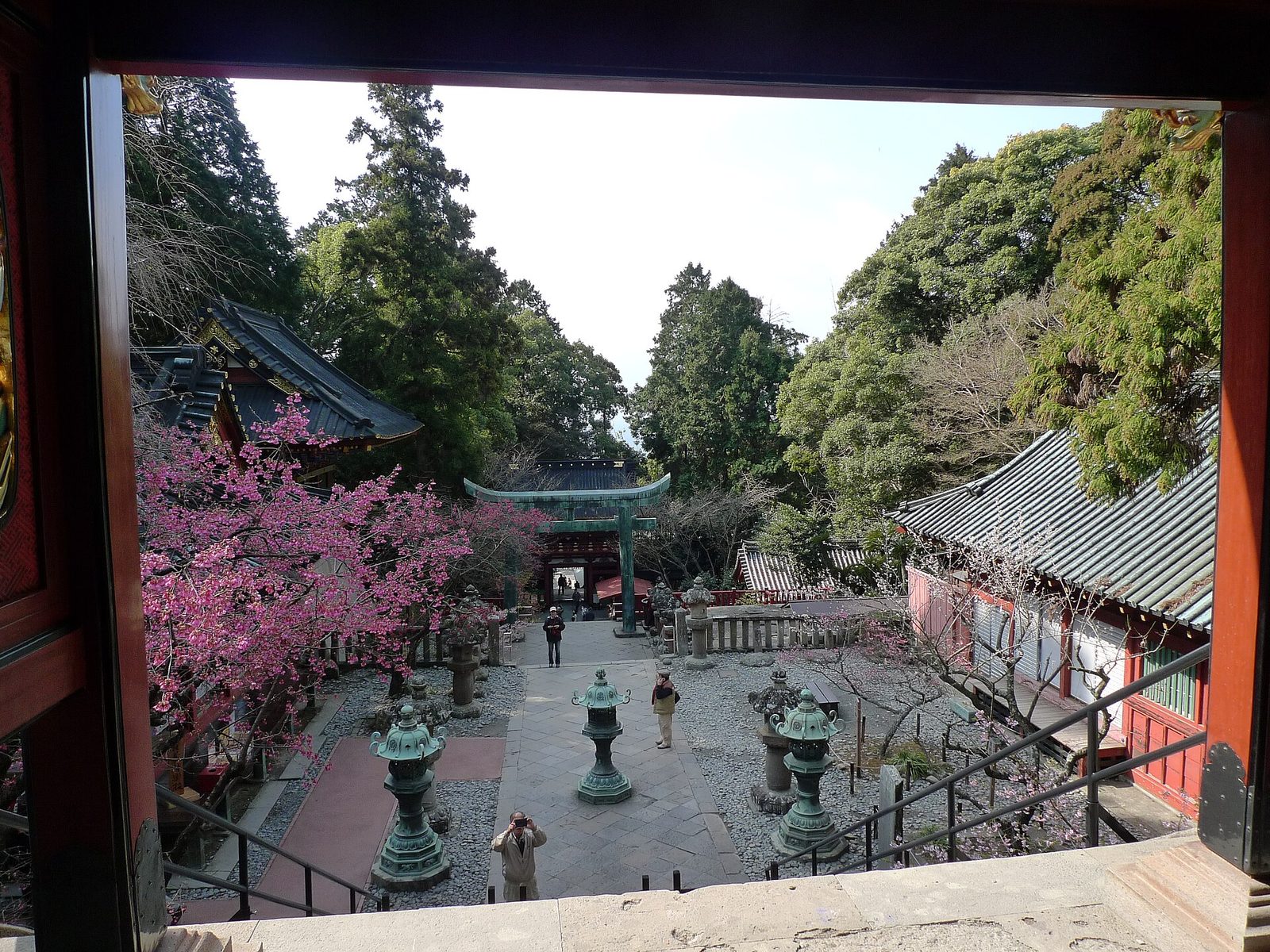
Japan’s oldest Toshogu shrine, Kunozan Toshogu is a designated National Treasure — and it looks the part. The elaborately carved, lacquered, and gold-leafed main hall is a jaw-dropping example of Edo-period craftsmanship, and the setting is made even more memorable by the ropeway descent from Nihondaira (about five minutes, with spectacular views along the way). The shrine complex includes a museum (combination ticket: ¥1,200) housing armor, swords, and other artifacts connected to Tokugawa Ieyasu, the powerful shogun enshrined here. For anyone interested in Japanese history, this is not to be missed.
Shimizu Fish Market “Kashi no Ichi” — Maguro-kan (Tuna Hall)

Shimizu is one of Japan’s most important tuna ports, and Kashi no Ichi is where you come to taste exactly that. A cluster of restaurants dedicated to fresh local tuna, the Maguro-kan (Tuna Hall) serves up beautifully arranged tuna rice bowls featuring lean cuts, medium fatty toro, and premium fatty toro — often at prices that feel almost too good to be true for the quality on offer. Visitors are consistently amazed at the freshness. The recently renovated Ichiba-kan (Market Hall) next door is the place to browse for seafood souvenirs and local food products. English menus are available.
Miho no Matsubara
A sweeping coastline of roughly 30,000 pine trees, Miho no Matsubara is registered as a component of Japan’s UNESCO World Cultural Heritage Site “Fujisan.” The path through the pines — known as the “Kami no Michi” (Divine Path) — is a serene, dappled walkway where the scent of salt air mingles with the rustling of ancient trees. Many visitors describe it as quietly moving, almost meditative. The centerpiece of the grove is the Hagoromo no Matsu — the legendary pine upon which a celestial maiden once hung her feathered robe — an image immortalized in classical Japanese art and theater. May is an ideal time to visit, with vibrant pine greens, clear blue Suruga Bay, and excellent odds of catching Mt. Fuji in full view.
S-Pulse Dream Plaza
Right next to the pier, this lively waterfront complex makes for the perfect final stop before heading back to the ship. The main draw for many visitors is Chibi Maruko-chan Land — a theme park celebrating the beloved anime series created by Shimizu-born manga artist Momoko Sakura. Cheerful, quirky, and entirely unique to this part of Japan, it’s fun for all ages. The Shimizu Sushi Alley within the complex is a great spot to squeeze in one last piece of local tuna sushi or sakura shrimp gunkan before departure. There’s also a solid selection of Shizuoka souvenirs and local food products if you still have shopping to do.
Opening Hours on Thursday, May 7, 2026
- ✅ Nihondaira Yume Terrace: Open Thursdays, regular hours (9:00–17:00). Closed the 2nd Tuesday of the month — no issue here.
- ✅ Kunozan Toshogu: No regular closing day. Open 9:00–17:00.
- ✅ Kashi no Ichi (Shimizu Fish Market): Closed Wednesdays — open as normal on Thursday. Ichiba-kan hours: 9:30–17:30.
- ✅ Miho no Matsubara: Open all day (Miho Shirube visitor center open 9:00–16:30).
- ✅ S-Pulse Dream Plaza: Open Thursday; hours vary by shop (retail generally 10:00–20:00).
As this port day falls on the first Thursday after Golden Week, most attractions should be considerably quieter than during the holiday itself. That said, some lingering holiday travelers may still be around, and lunch spots could get busy between 12:00 and 13:30. If you’re planning to eat at Kashi no Ichi, aiming for around 14:00 should help you avoid the midday rush and secure a table with ease.
5. Local Events on May 7, 2026
May 7 is the first Thursday after Golden Week, and while the holiday period is winding down, the Shimizu and Shizuoka area still has plenty going on. Consider weaving one of these events into your day if time allows.
1. Kitsunega-saki Arts Festival
| Item | Details |
|---|---|
| Event Name | Kitsunega-saki Arts Festival |
| Dates | Ongoing (check official website for details) |
| Location | Kitsunega-saki area, Shimizu Ward |
This arts festival transforms the Kitsunega-saki neighborhood of Shimizu into an open-air gallery, with exhibitions and performances by local and nationally recognized artists. The combination of creative energy and Shimizu’s harbor-town atmosphere makes for a distinctive cultural experience — a great complement to the day’s sightseeing.
2. GAKOTEN
| Item | Details |
|---|---|
| Event Name | GAKOTEN |
| Dates | Ongoing (check official website for details) |
| Location | Venues in Shizuoka City (see official website for details) |
A celebration of student and emerging creative talent, GAKOTEN brings together music, performance, and visual art under one roof. If you want to get a feel for the vibrant, youthful energy of contemporary Shizuoka, this is a great place to do it.
3. Children’s Day Traditional Decorations Exhibition
| Item | Details |
|---|---|
| Event Name | Children’s Day Traditional Decorations Exhibition (Tango no Sekku Kazari-ten) |
| Dates | Running around Japan’s Children’s Day (May 5) |
| Location | Facilities in Shizuoka City (see official website for details) |
Timed to coincide with Japan’s Children’s Day (May 5), this exhibition showcases traditional Tango no Sekku decorations — including ornamental samurai helmets, armor, and koi nobori (carp streamers). It’s a visually engaging introduction to Japanese seasonal customs and makes for a genuinely interesting cultural stop, especially for international visitors curious about Japanese traditions.
4. Noritake Suzuki Original Artwork Exhibition — Shimizu Culture Hall Marinart
| Item | Details |
|---|---|
| Event Name | Noritake Suzuki Original Artwork Exhibition |
| Dates | Ongoing (check official website for details) |
| Location | Shimizu Culture Hall Marinart (near Shimizu Port) |
A special exhibition of original artwork by Noritake Suzuki, a picture book author and illustrator born in Shimizu. His witty, highly inventive style appeals to children and adults alike. The venue — Marinart — is located just a short distance from the port, making it easy to fit in before or after your main sightseeing. A charming way to discover a beloved local artist and connect with Japan’s picture book culture.
5. Ukiyo-e Journey Along the Tokaido: Scenes of Suruga
| Item | Details |
|---|---|
| Event Name | Ukiyo-e Journey Along the Tokaido: Scenes of Suruga |
| Dates | Ongoing (check official website for details) |
| Location | Venues in Shizuoka City (see official website for details) |
An exhibition of woodblock prints by Edo-period masters including Utagawa Hiroshige, depicting famous views along the Tokaido road through Suruga Province — present-day Shizuoka. What makes this especially compelling on a day like today: many of the landscapes depicted — Satta Pass, Miho no Matsubara — are places you’ll be visiting in person. Seeing the same scenery through the eyes of an Edo-period artist, then experiencing it yourself, is a genuinely memorable way to connect past and present. Highly recommended for anyone with an interest in art or history.
6. Must-Try Food & Drink in Shimizu and Shizuoka
The Shimizu and Shizuoka area is one of Japan’s finest culinary destinations. Here are the dishes and drinks you shouldn’t leave without trying.
| Dish | Where to Find It | Price Range | Notes |
|---|---|---|---|
| Tuna rice bowl / sashimi platter | Kashi no Ichi, Maguro-kan | ¥1,000–2,500 | Locally caught, supremely fresh. English menus available. |
| Shimizu sushi (tuna, sakura shrimp gunkan) | Shimizu Sushi Alley (Dream Plaza) | ¥1,500–4,000 | 5 minutes from the pier. Multiple restaurants to choose from. |
| Sakura shrimp kakiage (fritter) | Yui Port area (25 min by car) | ¥800–1,500 | Spring fishing season is at its peak in May. Fresh raw shrimp also available. |
| Seafood bowl / minced tuna | Ichiba-kan (Kashi no Ichi) | ¥500–2,000 | Renovated in 2025. Good takeaway options too. |
| Shizuoka oden (black fish cake, beef tendon) | Aoba Yokocho, Shizuoka City | ¥500–1,500 | Served with green laver — uniquely Shizuoka. About 20 min by train from Shimizu. |
| Wasabi snacks (wasabi soft serve, wasabi pickles) | Around Shimizu Port area | ¥300–3,000 | Shizuoka is Japan’s top wasabi producer. Popular as souvenirs too. |
| New-crop green tea / matcha sweets | Throughout Shimizu and Shizuoka City | ¥300–1,500 | May is peak shincha season. Look for tea-leaf ice cream and matcha desserts. |
One ingredient deserves special mention: sakura ebi (sakura shrimp). These tiny, jewel-pink crustaceans — just 4–5 cm long — are found only in Suruga Bay and harvested just twice a year, in spring (March–June) and autumn (October–December). May sits squarely in the peak of the spring season, meaning freshly caught, raw sakura shrimp are available right now — a fleeting luxury even for local residents. Lightly battered and fried into kakiage fritters, they’re aromatic and delicate, and absolutely irresistible served over a bowl of rice. Restaurants near Yui Port (about 25 minutes by car) specialize in them, but you’ll also find sakura shrimp on menus closer to the port. If you spot a sign reading「さくらえび」, don’t hesitate — order it.
7. Practical Tips for a Smooth Day Ashore
Wi-Fi
Free Wi-Fi is available inside the Shimizu Port Passenger Terminal, so you can get connected the moment you step off the ship. S-Pulse Dream Plaza also offers free Wi-Fi throughout the complex. Convenience stores (7-Eleven, Lawson, FamilyMart) near the port provide free Wi-Fi access on a nationwide network as well. If you’re planning a longer day of exploring, a prepaid SIM card — available at major Japanese airports — is worth considering for uninterrupted connectivity.
Payments
Cash is king in Japan, especially at smaller restaurants, local food stalls, and taxis. Larger establishments at S-Pulse Dream Plaza and Kashi no Ichi generally accept credit cards, with Visa and Mastercard being the most widely accepted (American Express and Diners Club are sometimes declined). There are Seven Bank ATMs inside convenience stores near the port that accept international cards for yen withdrawals. We recommend carrying ¥3,000–10,000 per person in cash to ensure you’re covered in any situation.
IC Transport Cards
Local buses and JR trains in the area accept IC cards such as Suica and ICOCA — simply tap on and off for a seamless ride. These can be purchased and topped up at Shimizu Station and at nearby convenience stores. While cash is also accepted on most buses, note that change may not always be available, so IC cards or exact change are helpful. If you’re planning multiple bus or train journeys, an IC card will make your day considerably smoother.
Language Support
English-speaking staff are available at the tourist information office inside the Shimizu Port Passenger Terminal and at the Shimizu Station tourist information center. S-Pulse Dream Plaza and Kashi no Ichi have English menus and staff with varying levels of English ability. The Miho no Matsubara visitor center (“Miho Shirube”) offers multilingual brochures. Most taxi drivers speak Japanese only, but Google Translate (especially the camera and conversation features) works remarkably well in practice — download it before you leave the ship and you’ll be able to handle almost any situation that comes up.
Tourist Information Offices
- Inside Shimizu Port Passenger Terminal — Your first stop after disembarking. Get maps, arrange a taxi, and check the latest local information here.
- Shimizu Station Tourist Information Center — About 15 minutes on foot from the pier. Convenient if you’re heading to JR trains or local buses.
Emergency Contacts
| Purpose | Number |
|---|---|
| Police | 110 |
| Ambulance / Fire | 119 |
| Shizuoka City Tourism Info (English) | 054-221-1173 |
| Taxi (Shizutetsu Taxi) | 054-285-1212 |
8. Getting Back to the Ship
Azamara Pursuit departs at 19:00. Please plan to be back at Hinode Pier by 18:30 at the latest (30 minutes before departure) to allow ample time for re-boarding.
Your berth is at Shimizu Port, Hinode Pier. You can locate it on Google Maps by searching “Shimizu Port Hinode Pier” or “清水港 日の出埠頭.” If you’re in a taxi and need to return to the ship, tell your driver “Hinode Pier (日の出埠頭)” — showing the map on your smartphone will make sure there’s no confusion.
To stay safely on schedule, we recommend starting your journey back by 17:00–17:30 at the latest. Work backwards from your 18:30 re-boarding time when planning the end of your day, and build in a comfortable buffer — there’s nothing worse than rushing the last stretch of a wonderful shore day.
9. About Azamara Pursuit
Azamara Pursuit is a 30,277-gross-ton mid-size ship operated by Azamara Cruises. Launched in 2001 as part of the “R-Class” fleet (originally built for Renaissance Cruises), she was refitted for Azamara in 2018. Her compact size — carrying approximately 680 guests — allows her to call at smaller, less-visited ports that larger cruise ships simply cannot access, and it enables a level of personalized service that sets boutique cruising apart.
Among the highlights on board is the pool deck and open-air bar “The Patio” on the upper deck — a wonderful spot to sip a cocktail while watching a port come into view, or fade into the distance. Evening entertainment is varied and lively, from live music and comedy shows to cultural lectures. Perhaps most distinctively, Azamara’s philosophy of “Country Intensives” means sailings are deliberately structured with overnight stays and late departure times to maximize time in port — giving passengers a deeper, more immersive experience in each destination. Today’s 19:00 departure from Shimizu is a perfect expression of that commitment.
From the refined harbor atmosphere of Kobe, to the sweeping natural beauty and rich history of Shimizu, and onward to the energy of Tokyo — this voyage captures three of Japan’s most iconic faces in a single sailing. We hope today in Shimizu adds a vivid and memorable chapter to your journey. With warm wishes from the local side of the pier:
良い旅を。Have a wonderful voyage.
More Azamara Pursuit Calls at Shimizu Port
Guides for this ship’s other port calls: