Thursday, August 6, 2026. After departing Yokohama, Star Navigator sails west across Suruga Bay and arrives at Hinode Pier, Shimizu Port, at 08:00. She sets sail again the same day at 15:00, bound for Osaka. This is the ship’s very first call at Shimizu.
🇯🇵 日本語版はこちら: 日本語で読む
On paper you have seven hours in port, but once you factor in disembarkation and the return to the ship, roughly six hours outside the port gates is a realistic figure. Even so, that’s plenty of time to enjoy the best of Shimizu and Shizuoka in a single day: Nihondaira, looking down over Suruga Bay from 307 meters above sea level; Kunozan Toshogu Shrine with its glittering National Treasure halls; Miho no Matsubara, where Mt. Fuji rises beyond the pines; and Kashi no Ichi, the market where Shimizu’s famous tuna comes ashore.
Think of this page as your morning paper for your day in port — something to read on the morning your ship arrives at Shimizu on August 6, 2026. With Yokohama still fresh in your memory, what should you see, what should you eat, and how should you spend your hours in Shimizu? Here’s the full story, from a local point of view.
About the Author
Shimizu Port Cruise Guide — Site Operator
Based in Shizuoka City. I plan and run the “Shimizu Cruise Festival“, an event at Shimizu Port where visitors from Japan and abroad mingle with the local community, and I work on other projects that connect cruise travelers with local people.
Through my interactions with cruise travelers and local residents, I’ve come to realize that enjoying a limited port call is not just about deciding where to go. What really matters is concrete, up-to-date information: How long does it take to get there? Can I visit without a reservation? Will it be open that day?
On this site, I introduce access routes from Shimizu Port, sightseeing spots, events, restaurants, and model itineraries in an easy-to-follow way, from the perspective of someone active on the ground.
My goal is to bring you the kind of real, local information about Shimizu and Shizuoka that guidebooks alone can’t offer, and to help make your day in port an even more enjoyable and memorable one. My hope is that this site feels like the morning paper you read on the day your ship arrives at Shimizu.
- 1. Your Day in Port at a Glance
- 2. Weather and What to Wear on August 6, 2026
- 3. Getting from Shimizu Port into Town and to the Sights
- 4. Recommended Model Itinerary: "A Summer Day Around Suruga Bay"
- 5. Shimizu Events on August 6, 2026
- 6. Local Food Specialties of Shimizu and Shizuoka
- 7. Practical Information for a Worry-Free Day
- 8. Getting Back to the Ship
- 9. About Star Navigator
1. Your Day in Port at a Glance
First, here’s a quick summary of the schedule for August 6, 2026.
| Item | Details |
|---|---|
| Date in port | Thursday, August 6, 2026 |
| Arrival | 08:00 |
| Departure | 15:00 |
| Scheduled time in port | About 7 hours |
| Realistic sightseeing time | About 6 hours |
| Berth | Hinode Pier, Shimizu Port |
| Previous port | Yokohama |
| Next port | Osaka |
Early August is the liveliest time of year at Shimizu Port. The Shimizu Minato Festival is held every year from late July into early August, and its energy still lingers all around town. Walk along the waterfront and you’ll catch the sea breeze, the buzz of cicadas, and the voices of sun-tanned children.
The early 08:00 arrival is a real advantage on this day. If you head up to Nihondaira and Kunozan while the morning light is still soft, you can cover the highlights before the heat of the day sets in. Mt. Fuji is often hidden by summer clouds, so consider it a stroke of luck if it appears. Even if it doesn’t, the sweeping view over Suruga Bay and the Izu Peninsula is well worth the trip.
2. Weather and What to Wear on August 6, 2026
The forecast for your day in port calls for moderate drizzle, with a high of 31.4℃ (89°F), a low of 25.9℃ (79°F), and a 31% chance of rain. Expect humid air with occasional fine rain rather than a proper downpour. If you’re not used to Celsius, use these as rough guides: 30℃ = 86°F, 35℃ = 95°F, 40℃ = 104°F.
Short sleeves in breathable fabrics will be most comfortable. Japanese summers are very humid, so 31℃ can feel considerably hotter than it sounds. If you plan to walk a lot, drink water frequently and take breaks in the shade or in air-conditioned buildings. Bringing a folding umbrella or a light rain jacket is a good idea — even if drizzle alone might not require one, you’ll be glad to have it.
Miho no Matsubara and Nihondaira are mostly outdoors, so non-slip sneakers are recommended. At Kunozan Toshogu you’ll be walking up stone steps and along an approach path, so watch your footing on wet surfaces.
7-day Shizuoka forecast by meteoblue
Please note that this forecast reflects conditions as of publication (a few days before your call). The weather widget above always shows the latest weekly forecast, so do check it again on the morning of your visit.
3. Getting from Shimizu Port into Town and to the Sights
There are several ways to get around from Shimizu Port. Below is a breakdown of fares, payment methods, and frequency for each option. If you want maximum freedom during your limited time in port, a taxi is your best bet.
🚕 Taxi (the most flexible option — recommended)

The biggest advantage is being able to combine hard-to-reach places like Nihondaira and Kunozan Toshogu in one trip. Split among a group, the cost per person is more reasonable than you might expect. Our model itinerary uses a taxi for the ride up to Nihondaira.
- 【Where to board】Taxis line up at Hinode Pier to meet arriving cruise ships. If you don’t see any, staff at the tourist information desk in the port terminal can call one for you (Shizutetsu Taxi dispatch center: 054-281-5111)
- 【How fares work】Metered. The flag-fall fare is ¥700 (up to 1.17 km), then ¥100 for every additional 285 m. Time-based charges also apply while stopped at lights or in traffic. It’s perfectly acceptable to ask “About how much to ○○?” before you get in
- 【Chartering a taxi】Hourly charter is ¥7,700 per hour for a standard car. Shizutetsu Taxi’s sightseeing plans start at ¥30,800 for four hours — about ¥7,700 per person with four people. Show the driver your list of spots and plan the route together
- 【Payment】Cash and credit cards are the safest bets. IC transit cards and QR payments vary by vehicle, so check before boarding if you want to use them. No tipping required
- 【Language】Most drivers speak only Japanese, but showing them the spot names from this article (with Japanese script) on your phone works perfectly well
🚌 Free Shuttle Bus (port to Shimizu Station — an under-appreciated ally)

Shimizu Port has two different free buses, and they leave from different places.
1. The S-Pulse Dream Plaza free shuttle (year-round, open to everyone)

It links Dream Plaza, Shizutetsu Shin-Shimizu Station and the Minato exit of JR Shimizu Station in about 8 minutes. It leaves from the Dream Plaza bus stop next to the pier, not from Hinode Wharf itself.
- Fare: free. You don’t need to be a shopper to ride
- Frequency: every 30 minutes on weekdays (departing Dream Plaza on the hour and half hour), every 15 minutes on weekends and holidays
- First and last: first bus from Dream Plaza at 10:00, last at 22:20; first from JR Shimizu Station at 9:45
- It does not run before 10:00. On an early arrival, take a taxi or walk for your first move of the day
2. A port-day shuttle for cruise passengers (arranged by the cruise line)

On call days a free bus often leaves from directly in front of Hinode Wharf for Shin-Shimizu and JR Shimizu stations. Unlike the Dream Plaza shuttle, you board it steps from the gangway. During the Celebrity Millennium call on August 16, 2026, it was operated by Ihara Kanko (verified on site by our editors). Whether it runs, and its times and destinations, vary by call — check your ship’s daily program or ask the staff on the pier.
⛴ Water Bus (travel with Mt. Fuji views from the water)

Small boats run from the Hinode landing (in front of Dream Plaza) to Miho and to Ejiri (near Kashi no Ichi market). The ride itself is a sightseeing experience. Our model itinerary uses it too.
- 【How fares work】Flat rate per leg: ¥1,000 for adults, ¥500 for elementary school children. Hinode to Miho takes about 15 minutes; Hinode to Ejiri about 10 minutes
- 【Frequency】Seven sailings per day. No reservations — first come, first served
- 【Tickets】Buy your ticket at the landing
- 【Cancellations】Since the route stays inside the harbor, cancellations are rare, but service may be suspended in typhoons or other severe weather. Check the day’s operating status at the landing or by phone (054-353-2222). With drizzle forecast for August 6, a quick check in the morning will make planning easier
🚏 Local Bus (the standard route to Miho — Shizutetsu Just Line)
To reach Miho no Matsubara by public transport, take the Miho Yamanote Line. From Shimizu Station to Miho no Matsubara Iriguchi is ¥440 and about 25 minutes.
- 【Frequency】Roughly 3–4 buses per hour during the day
- 【How to ride】Board through the rear door and pay at the fare box near the driver when you get off. With nationally interoperable IC cards such as Suica or ICOCA, just tap on when boarding and tap off when leaving
- 【If paying cash】The onboard change machine accepts coins and ¥1,000 notes only. If you only have larger bills, break them at a convenience store beforehand
- 【Note】You’ll need the free shuttle bus or a walk to get from the port to the Shimizu Station bus terminal
🚃 Train (to central Shizuoka)
This is your option for venturing to the Shizuoka Station area, home to Aoba Yokocho (Shizuoka oden) and Sunpu Castle Park. On a drizzly day, a covered train ride is a comfortable way to travel.
- 【JR Tokaido Line】Shimizu to Shizuoka: ¥240, about 12 minutes. 3–4 trains per hour during the day
- 【Shizuoka Railway (Shizutetsu)】Shin-Shimizu to Shin-Shizuoka: ¥350, about 23 minutes. Trains run roughly every 8 minutes, so there’s no need to check timetables
- 【Payment】Both accept IC cards such as Suica and ICOCA. Contactless credit card tap-to-ride is not supported, so use an IC card or buy a paper ticket with cash
- 【From the port to the stations】The free shuttle bus is the easiest way to reach Shimizu Station and Shin-Shimizu Station
🚶 On Foot (fine for the area right around the port)
- S-Pulse Dream Plaza: right next to the pier (1–3 minutes’ walk)
- Shimizu Fish Market “Kashi no Ichi”: about 1.3 km, 15–20 minutes on foot. Or take the water bus from Hinode to Ejiri (about 10 minutes) and the market is right in front of you when you land
- JR Shimizu Station: about 1.5 km, 20–25 minutes on foot. The free shuttle bus is recommended
- Shin-Shimizu Station (Shizutetsu): about 1 km, roughly 15 minutes on foot
For more detail on transport and practical tips, see our Shimizu Cruise Port Complete Guide.

4. Recommended Model Itinerary: “A Summer Day Around Suruga Bay”
If you’re weighing a ship’s excursion against a local tour or going independently, start with our Shimizu Shore Excursions Compared, which lays out costs and who each option suits best.
“What should I see in six hours?” Here’s a local’s answer. With an early 08:00 arrival and a 15:00 departure, your strength on this day is a full morning. So this plan takes a taxi straight up to Nihondaira first thing, visits Kunozan Toshogu, then works its way back down toward the harbor.
The route runs one way — from the port up to the southern heights, then back along the coast. Because you never retrace your steps, you don’t waste your limited time in transit. A tuna rice bowl for lunch, Miho no Matsubara in the afternoon, and a final stop at Dream Plaza right beside the pier make for a relaxed return to the ship.
| Time | Spot | What you’ll do | Approx. duration |
|---|---|---|---|
| 08:30 | Hinode Pier | Disembark and take a taxi to Nihondaira (about 30 min) | 30 min |
| 09:00 | Nihondaira & Nihondaira Yume Terrace | Take in Suruga Bay and the direction of Mt. Fuji from the 360-degree observation walkway | 45 min |
| 09:45 | Nihondaira Ropeway | A short aerial ride to Kunozan (about 5 min) | 15 min |
| 10:00 | Kunozan Toshogu Shrine | Visit the National Treasure shrine buildings and museum | 70 min |
| 11:10 | Transit | Ropeway back to Nihondaira, then taxi toward Shimizu Station (about 25 min) | 30 min |
| 11:40 | Shimizu Fish Market “Kashi no Ichi” | Early lunch — a tuna rice bowl — plus souvenir shopping | 55 min |
| 12:35 | Transit | Water bus from the Ejiri landing to Miho (about 25–30 min) | 30 min |
| 13:05 | Miho no Matsubara | The Path of the Gods, the Hagoromo Pine, and sea views through the pines | 55 min |
| 14:00 | Transit | Water bus from Miho to Hinode (about 15 min) | 20 min |
| 14:20 | S-Pulse Dream Plaza | Last-minute souvenirs and a soft-serve ice cream break | 20 min |
| 14:30 | Hinode Pier | Five-minute walk back to the ship | — |
Estimated budget: from about ¥12,000 per person (taxi, admissions, and meals included)
Nihondaira & Nihondaira Yume Terrace
This observation facility stands atop a 307-meter summit. Walk the full circuit of its timber-latticed corridor and you’ll see Suruga Bay, the Izu Peninsula, Miho no Matsubara, and — on a clear day — Mt. Fuji itself. Admission is free, and the observation walkway is open all day. Summer brings a lot of cloud, but visibility tends to be better in the morning hours. Inside there are exhibits on Shizuoka’s landscape and the history of its tea, so you can learn something while cooling off.
For details on visiting Nihondaira and Kunozan Toshogu independently, including routes and costs, see our Nihondaira & Kunozan Toshogu Guide.
Nihondaira Ropeway
This ropeway links the summit of Nihondaira with Kunozan in about five minutes. As you cross the valley, Suruga Bay and the slopes of the Kunou coast draw dramatically closer. Since cars cannot drive directly up to Kunozan Toshogu, the ropeway is effectively the gateway. It runs in the rain, but may be suspended in strong winds or thunderstorms.
Kunozan Toshogu Shrine
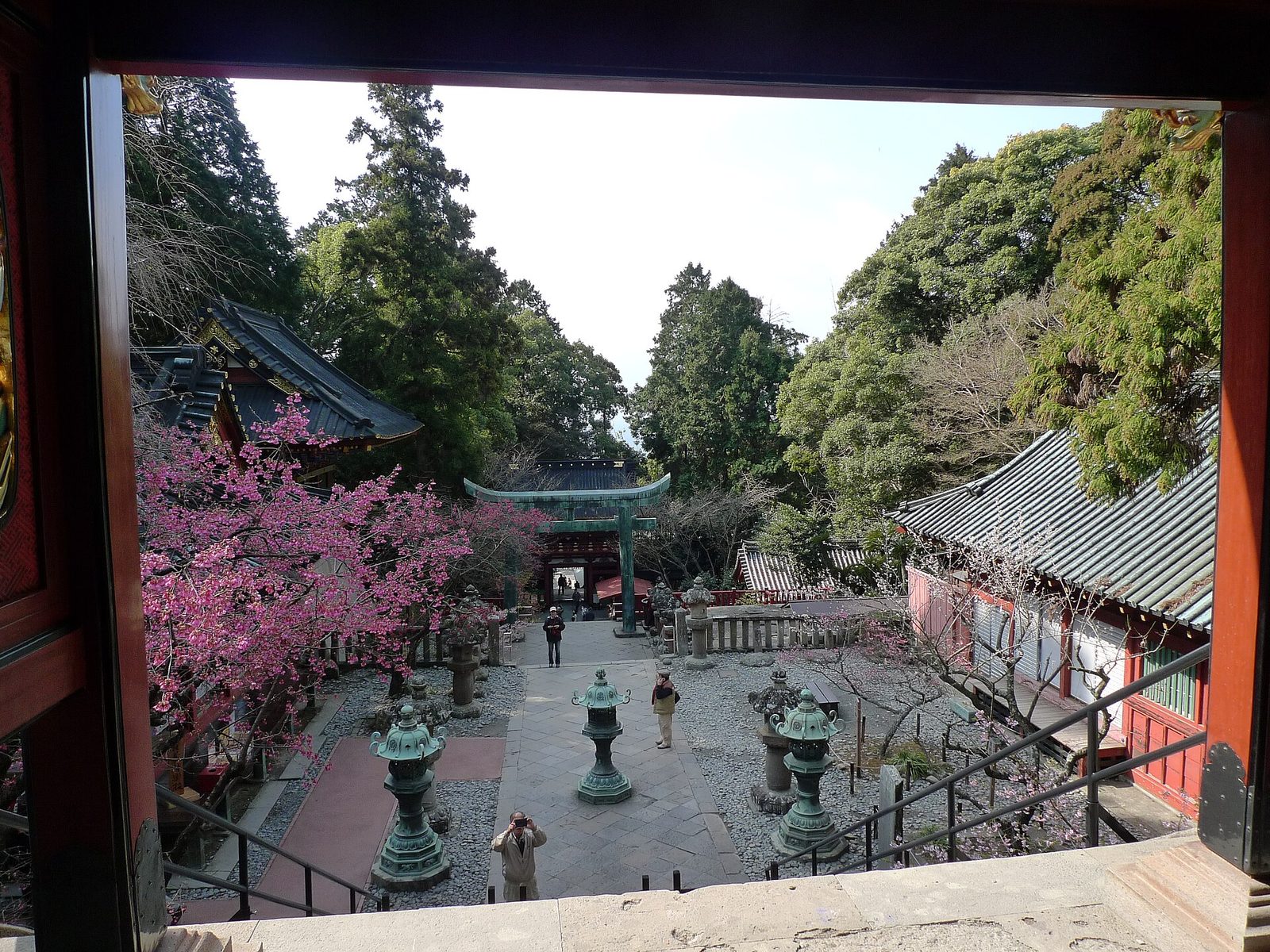
Dedicated to Tokugawa Ieyasu, this is the oldest Toshogu shrine in Japan. The shrine buildings, completed in 1617, are designated a National Treasure and are covered in vividly colored carvings in vermilion, black, and gold. The grounds also include a museum housing Ieyasu’s personal effects. Admission is ¥700 for the shrine, ¥600 for the museum, or ¥1,200 for a combined ticket — worth it if you have time to spare. Open 9:00–17:00, year-round.
Shimizu Fish Market “Kashi no Ichi”

This is a working fish market, stocked with the catch landed at Shimizu Port, opened up to the general public. It consists of two buildings: “Maguro-kan,” filled with restaurants, and “Ichiba-kan,” selling fresh fish and processed products. Shimizu is one of Japan’s major hubs for tuna distribution, and you can find tuna rice bowls featuring lean, medium-fatty, and fatty cuts on a single plate starting from around ¥1,000. Arriving around 11:30, before the rush, is the whole point of this itinerary’s timing.
Miho no Matsubara
Some 30,000 pine trees stretch along this shoreline, part of the Mt. Fuji UNESCO World Heritage site. The approach known as the “Path of the Gods” is a 500-meter boardwalk lined with pines centuries old, where the shade feels cool even in midsummer. At the far end stands the Hagoromo Pine, where legend says a heavenly maiden hung her feather robe. The Mihoshirube visitor center (9:00–16:30, free admission) offers pamphlets in multiple languages.
For more on the highlights, the Hagoromo legend, and how to get there, see our Miho no Matsubara UNESCO Guide.
S-Pulse Dream Plaza
This shopping complex stands right beside the pier, just 1–3 minutes’ walk from the ship. It houses around 60 shops, plus Shimizu Sushi Yokocho, Chibi Maruko-chan Land (¥1,200 adults, ¥700 ages 3 through elementary school), and the 52-meter Dream Sky Ferris wheel (¥700, about 13 minutes per rotation). It’s the perfect spot for last-minute shopping before boarding, and being indoors, rain is no problem.
Opening status on Thursday, August 6, 2026
- Nihondaira Yume Terrace: Open (closed the 2nd Tuesday of the month and Dec 26–31 — Thursdays are fine)
- Kunozan Toshogu Shrine: Open (9:00–17:00, no closing days)
- Shimizu Fish Market “Kashi no Ichi”: Open (closed Wednesdays, so Thursday is fine. Hours in Maguro-kan vary by restaurant)
- Miho no Matsubara & Mihoshirube: Open (9:00–16:30, open year-round)
- S-Pulse Dream Plaza: Open (shops 10:00–20:00 / restaurants 11:00–21:00)
- Shimizu Port Water Bus: Seven sailings daily (departures from Hinode 9:55–16:35). Subject to changes or cancellation in bad weather
- Verkehr Museum: Open (9:30–16:30, closed Mondays) — a good option if you have time left over
Early August falls during Japan’s school summer holidays, so Kashi no Ichi and Dream Plaza will be busy with families. Popular restaurants in Maguro-kan build queues around noon, which is exactly why this itinerary has you sitting down around 11:30.
For options beyond those covered here — from spots within walking distance to half-day routes and rainy-day plans — see our 20 Things to Do in Shimizu.
5. Shimizu Events on August 6, 2026
August 6 lands in the middle of Japan’s school summer holidays, and there are happenings right by the pier that you can walk into straight off the ship.
🐉 ① “World’s First! Dragon Zoo” — Shimizoo Special Edition (July 31 – August 30)
Five minutes’ walk from the gangway, on the 3rd floor of S-Pulse Dream Plaza’s main “SEA-side” building, a dragon-themed animal exhibition is running through the summer. Hours are 10:00–17:00 (last entry 16:30); admission is ¥1,000 for junior-high age and up, ¥600 for ages 3 through elementary school, free under 2. It’s indoors and air-conditioned — a comfortable pick given the day’s forecast of drizzle and 31°C heat, and close enough to the ship to slot in just before reboarding. Details on the Dream Plaza official page.
⚓ ② Kodomo Work in Shimizu Port 2026 (July 18 – August 20)
All around the port, local children are taking part in summer work-experience programs — trying out real harbor jobs for a day. Most require advance sign-up, so joining on the day isn’t realistic, but it’s one reason the waterfront feels especially lively with families right now; you may well spot kids “on the job” as you walk the harbor.
One event to note and let go: the Nihondaira Hotel’s outdoor garden hosts “Hanabi de Night Summer Garden 2026” — fireworks with dinner — on the evenings of August 6–10 from 18:00. With Star Navigator departing at 15:00, it’s out of reach on this call.
Beyond these, small summer festivals and shopping-street happenings are often announced at short notice, so after disembarking it’s worth stopping by the tourist information desk in the Shimizu Port Passenger Terminal and asking, “Is anything happening nearby today?”
⚠️ Events may be changed or cancelled due to weather or other circumstances. Please check official sources before heading out.
6. Local Food Specialties of Shimizu and Shizuoka
The Shimizu and Shizuoka area is one of Japan’s finest food destinations. Here are the specialties we’d most like you to try during your day in port.
| Dish | Where | Price range | Notes |
|---|---|---|---|
| Tuna rice bowls & sashimi platters | Maguro-kan (inside Kashi no Ichi, 10 min walk) | ¥1,000–2,500 | The classic way to taste Shimizu tuna. English menus, cards accepted |
| Shimizu tuna sushi | Shimizu Sushi Yokocho (inside Dream Plaza, 5 min walk) | ¥1,500–4,000 | The closest sushi district to the port. Sakura shrimp gunkan too |
| Raw whitebait & shirasu bowls | Kashi no Ichi, Miho & Mochimune area | ¥1,000–2,000 | The signature taste of summer in Suruga Bay. Only edible raw near where it’s landed |
| Sakura shrimp kakiage fritters | Yui Fishing Port area (25 min by car) | ¥800–1,500 | Cash only, sold until they run out. Fishing seasons are spring and autumn |
| Shizuoka oden | Aoba Yokocho (20 min by train from Shimizu Station + 5 min walk) | ¥500–1,500 | Black fish cake sprinkled with dried fish powder — a true Suruga flavor |
| Wasabi dishes | Various spots around Shimizu Port | ¥300–3,000 | Shizuoka is Japan’s top wasabi producer. Try wasabi soft-serve |
| Seafood takeaway | Ichiba-kan (Kashi no Ichi) | ¥500–2,000 | Tuna tataki, sakura shrimp shumai. 9:30–17:30 |
The one seasonal delicacy we especially want to highlight is raw shirasu (whitebait), available in August. Shirasu are juvenile sardines, and because they spoil so quickly, they can only be sold raw very close to where they’re landed. Suruga Bay is one of Japan’s premier shirasu fishing grounds, and summer is peak season. The translucent, silky texture and the gentle sweetness that follows each bite make it a completely different food from the boiled version. Look for “nama shirasu don” (raw whitebait rice bowl) at restaurants in Kashi no Ichi and at shirasu specialty shops around Miho and Mochimune. It’s only served when the boats have come in that day, so if you see a sign announcing fresh raw shirasu, order it without hesitation.
For a deeper dive into tuna, sakura shrimp, and shirasu — seasons, how to eat them, and where to go — see our Shimizu Seafood Guide.
7. Practical Information for a Worry-Free Day
Wi-Fi
- Shimizu Port Terminal: Free Wi-Fi available (inside the terminal)
- S-Pulse Dream Plaza: Free Wi-Fi available
- Convenience stores (7-Eleven, Lawson, FamilyMart): Nationwide free Wi-Fi available
- SIM cards: Buying a prepaid SIM at the airport makes everything smoother
Payment Methods
Many shops in Japan still operate primarily on cash, and small restaurants and taxis in particular may accept nothing else. Credit cards work at larger stores in S-Pulse Dream Plaza and Kashi no Ichi, with Visa and Mastercard the most widely accepted. Amex and Diners are refused fairly often. ATMs are available at convenience stores near the port (Seven Bank). As a rule of thumb, carrying ¥3,000–10,000 in cash per person per day will keep things easy.
IC Transit Cards
Buses and trains accept nationally interoperable IC cards such as Suica and ICOCA. You can buy them at convenience stores near the port or at Shimizu Station. Cash works too, but since only certain bills can be changed on board, having coins on hand saves trouble.
Language Support
Tourist information centers (Shimizu Port Terminal and Shimizu Station) have English-speaking staff. At S-Pulse Dream Plaza and Kashi no Ichi you’ll find English menus and staff who speak some English. The Mihoshirube center at Miho no Matsubara stocks pamphlets in multiple languages. Taxi drivers generally speak only Japanese, so we recommend showing your destination in Japanese on your phone or using Google Translate.
Tourist Information Centers
- Inside the Shimizu Port Passenger Terminal — right where you disembark
- Shimizu Station Tourist Information Center — about 1.5 km from the port (free shuttle bus, or 20–25 minutes on foot)
Emergency Contacts
| Purpose | Number |
|---|---|
| Police | 110 |
| Ambulance / Fire | 119 |
| Shizuoka City Tourist Information Center (Shizuoka Station north exit, English available) | 054-253-1170 |
| Taxi (Shizutetsu Taxi central dispatch) | 054-281-5111 |
8. Getting Back to the Ship
Star Navigator departs at 15:00. Allowing for the onboard muster time, you’ll want to be back at Hinode Pier by 14:30. That’s exactly why this itinerary ends at Dream Plaza — it’s only a five-minute walk from there to the pier.
If you get lost, search Google Maps for “Shimizu Port Hinode Pier” or “清水港 日の出埠頭”. Your ship’s large hull is visible along the waterfront, so once you get close, it’s easy to spot.
If you’re returning by taxi, telling the driver “清水港 日の出埠頭 (Hinode Pier)” will do the trick. Showing them this page on your phone is another reliable method. The ride from central Shimizu to the pier takes about 10 minutes without traffic, but roads can get congested on summer holiday afternoons, so leave yourself a comfortable margin.
9. About Star Navigator
Star Navigator is a 75,338-ton cruise ship carrying about 2,800 passengers with a crew of roughly 1,300. She was built in 1999 at the Meyer Werft shipyard in Germany and is operated by StarDream Cruises. The ship began life as SuperStar Virgo, a pioneer of casual cruising for the Asian market, and was relaunched as Star Navigator in March 2025. Since 2025 she has been based in Keelung, Taiwan, running round-trip cruises to Japan and Korea.
Onboard, she feels like Asian cruise culture given physical form. A wide range of restaurants lets you choose between Chinese, Japanese, and buffet dining depending on your mood. The upper-deck pool area is the go-to hangout while at sea — and as the ship pulls away from Suruga Bay in the late afternoon, this may be where you catch a last glimpse of Mt. Fuji’s ridgeline receding into the distance.
Entertainment is plentiful too, with theater shows, live music, and karaoke rooms, and the atmosphere onboard grows noticeably livelier after dark. That’s the pleasure of a large ship: even when you return with tired legs after a day walking around Shimizu, the day still has more to offer.
From the cosmopolitan harbor of Yokohama to the sea, mountains, and food of Shimizu — and next to the bustling old neighborhoods of Osaka — this voyage shows you Japan’s many different faces in turn. Since this is Star Navigator’s very first call at Shimizu, your first impression will become “the memory of Shimizu.” We look forward to seeing you at the port!
良い旅を。Have a wonderful voyage.