
“Looking for ideas for exploring Shimizu” — if that’s you, this is the list. We’re based in Shimizu, we don’t sell tours, and we’ve organized everything a cruise passenger can realistically do here by the only measure that matters on a port day: how far it is from your ship, and how long it takes. Every entry below includes the cost, the closing days (this port has a few traps — more on that in a minute), and a link to our detailed guide where we have one.
Quick orientation: your ship docks at Hinode Pier, essentially in the middle of town. A shopping complex sits five minutes’ walk away, a fish market ten minutes further, and the big scenery — Mt. Fuji across the bay, a UNESCO pine grove, a gold-leafed shrine on a mountainside — all within a 20-minute ride. For transport, money, and Wi-Fi basics, start with our Shimizu Port Complete Guide.
🇯🇵 日本語版はこちら: 日本語で読む
📰 Download the one-page Shimizu Port Day News (PDF) — the closing-day table, the walkable picks, half-day routes and rough costs on a single A4 sheet. Wi-Fi is patchy at sea, so print it before you board and bring it ashore.
- ⚠️ First, Check Your Day of the Week
- Walk Off the Ship (0–15 minutes on foot)
- A Short Hop Away (water bus, shuttle, or a 15–20 minute taxi)
- Worth Half a Day (plan 4+ hours ashore)
- Seasonal and Situational (check the calendar)
- Bonus Ideas for Repeat Visitors and Long Calls
- Three Ready-Made Combinations
- Frequently Asked Questions
⚠️ First, Check Your Day of the Week
More port-day plans die on closing days here than on anything else. Before you fall in love with an idea below, check this table:
| Your port day is a… | Closed that day |
|---|---|
| Monday | Verkehr Museum, Toro ruins museum, Sunpu Castle buildings (parks/grounds stay open) |
| Tuesday | Jirocho’s Birthplace; Nihondaira Yume Terrace on the *2nd Tuesday* of the month |
| Wednesday | Kashi no Ichi fish market — the big one to know |
| Weekday (any) | Yamauchiya strawberry farm (weekends/holidays only) |
Everything else on this list runs seven days a week.
Walk Off the Ship (0–15 minutes on foot)

1. S-Pulse Dream Plaza

The waterfront shopping complex five minutes from the gangway: about 60 shops, a food court, sushi restaurants, and most of items 2–4 below under one roof. Free to enter, shops 10:00–20:00, restaurants to 21:00. It’s also the rainy-day safety net for this entire list.
2. Chibi Maruko-chan Land
Shimizu is the real-life hometown of *Chibi Maruko-chan*, one of Japan’s most beloved anime characters, and this small indoor theme park on Dream Plaza’s third floor recreates her 1970s world. Open 10:00–20:00 (last entry 19:30), 365 days a year. ¥1,200 adults / ¥700 children. Endearing even if you’ve never seen the show — and air-conditioned, which matters in summer.
3. The Dream Sky Ferris Wheel
A 52-meter wheel right at the harbor; one 13-minute rotation gives you the port, Suruga Bay, and — on a clear day — Mt. Fuji. ¥700 per person, from 10:00 daily (to 21:00 April–October, 20:00 in winter; pauses in high winds). Cheap, quick, and a genuinely good first look at the geography you’re about to explore.
4. Shimizu Sushi Museum
A compact, cheerfully retro museum inside Dream Plaza about the history of sushi — fitting, since Shimizu handles more tuna than any port in Japan. 11:00–18:00, ¥500 adults / ¥200 children (half price with a receipt from the adjoining Sushi Alley restaurants, which is the correct order of operations: eat first).
5. Verkehr Museum
A quietly excellent little museum of ships and the port, run by a 200-year-old local shipping company. Model ships, port history, and a canning museum annex — Shimizu is also Japan’s canned-tuna capital. 9:30–16:30, closed Mondays, ¥400. A short walk from Dream Plaza along the harbor.
6. The Waterfront Promenade and Your First Mt. Fuji
Free, always open, and best in the early morning: the walkway along the harbor looks straight across the bay toward Mt. Fuji. The mountain shows itself most reliably before mid-morning — many passengers get their best view of the entire day from the deck as the ship comes in. If Fuji is your priority, read the honest expectations in our Mt. Fuji Day Trip guide before you spend money chasing it.
7. Jirocho’s Birthplace
Shimizu’s favorite son is Jirocho (1820–1893), a gambler-turned-folk-hero somewhere between Robin Hood and a frontier boss, and his preserved merchant-house birthplace sits in the old port district within walking distance of the pier. Free, open 10:00–16:00 weekdays / to 17:00 weekends, closed Tuesdays. Twenty minutes here is a better local-history fix than most paid attractions. His full story — outlaw boss to father of the port, via a famous wartime act of mercy — is in our Story of Shimizu Jirocho.
A Short Hop Away (water bus, shuttle, or a 15–20 minute taxi)

8. Ride the Water Bus Across the Harbor

Shimizu’s best cheap thrill: the little water bus that links Hinode Pier (2 minutes from Dream Plaza), Ejiri (by the fish market), and Miho. ¥1,000 per hop or ¥1,800 for the full 55-minute loop — which on a clear day is a bargain Mt. Fuji cruise. Seven departures a day from Hinode, 9:55–15:55; check the day’s timetable before building a schedule around it. Details in our Miho DIY guide.
9. Take the 40-Minute Bay Cruise
Bigger boat, same idea: a proper sightseeing loop of the harbor with Fuji-and-container-crane views, departing Hinode at 11:30, 13:00, 14:00, and 15:00. ¥2,000 adults / ¥1,000 children. (The shorter hop-on variant that used to stop at Miho has been suspended since April 2026 — the water bus above covers that job now.)
10. Eat Tuna at Kashi no Ichi Fish Market

Japan’s number-one tuna port, at lunch. Two buildings of fishmongers and market restaurants serving maguro bowls that would cost triple in Tokyo. Market hall 9:30–17:30, closed Wednesdays — the single most important closing day on this list. A 10-minute walk from Dream Plaza or one water-bus stop. Our full market guide covers which building to enter and how to order; our seafood guide explains what makes Shimizu tuna special.
11. Wander the Shimizu Ginza Arcades
A 430-meter covered arcade and the shopping streets around it: family-run shops, a street piano, everyday Japan with zero tourist infrastructure. Twenty minutes on foot from the pier or a short taxi. Free, obviously; most shops keep daytime hours. This is the best rainy-day pick outside Dream Plaza, and our Shimizu Ginza guide tells its surprisingly good backstory.
Bonus: there’s now a guided supermarket tour. If you’ve cruised Japan before, you know that browsing a real Japanese grocery store ranks alongside shrines and viewpoints among travelers’ favorite port memories. Our editorial team has turned that into a small-group experience: the Shimizu Local Supermarket Tour, two hours through Shizuoka’s everyday food culture (kurohanpen fish cakes, dashi flakes, deep-steamed tea, real wasabi) with a personal shopping list built from your pre-tour questionnaire. Meeting point is right at Hinode Pier, ¥6,000 per person, with English-language sessions available. Details in the tour announcement.
12. Stand Under the Pines at Miho no Matsubara
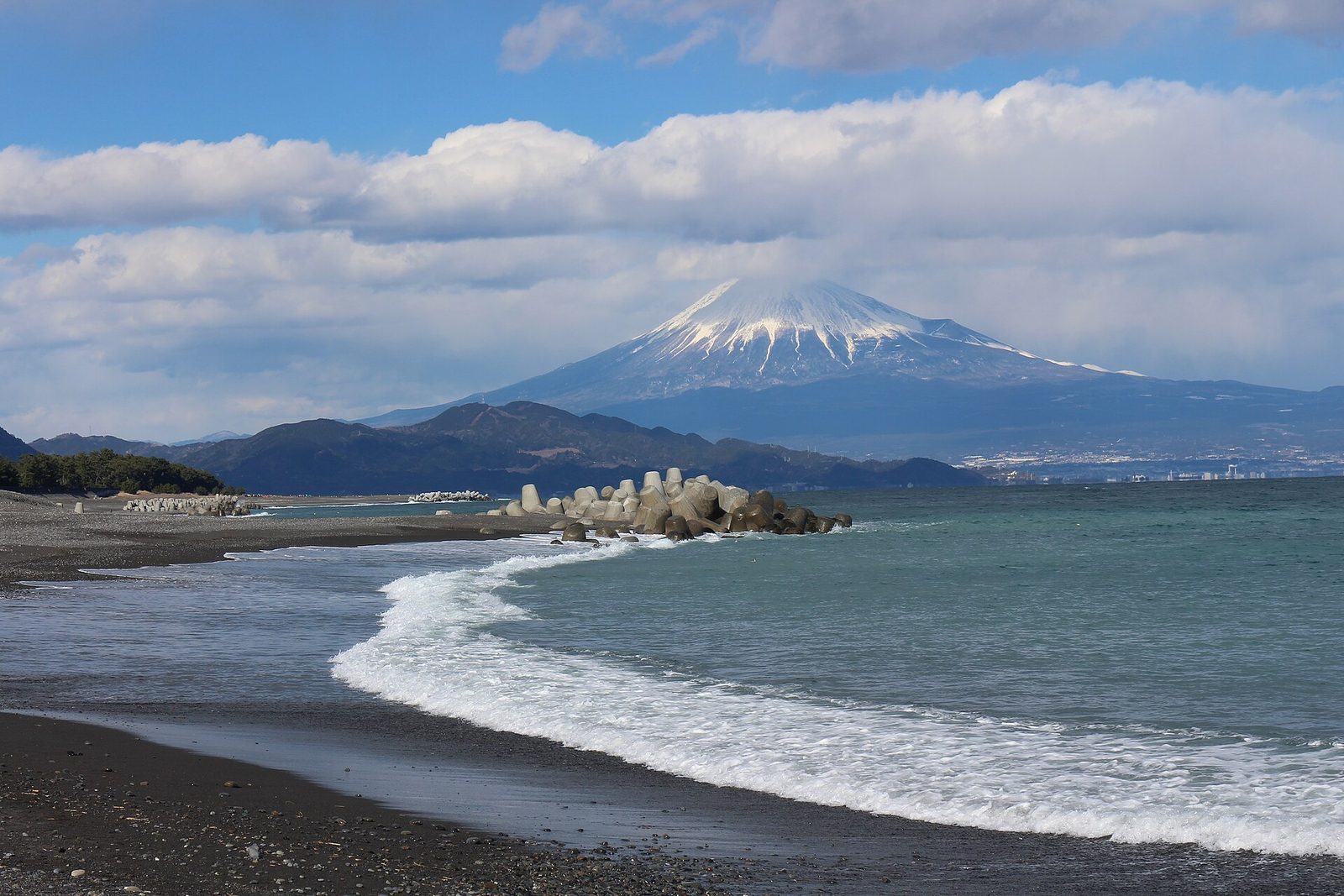
The UNESCO World Heritage pine grove where, legend says, an angel hung her feathered robe. Thirty thousand pines, the “Divine Path” walkway, and — weather permitting — the Mt. Fuji view that ukiyo-e artists made famous. Free; the Mihoshirube visitor center (9:00–16:30, no closing days) is worth 20 minutes. Taxi from the pier in 15–20 minutes (¥2,500–¥3,500) or water bus + short bus/walk. The story behind it: our Miho no Matsubara guide. The logistics: our DIY excursion guide.
13. Walk Miho Beach
Same peninsula, different mood: three kilometers of dark pebble beach facing Fuji straight across the water. Free and never closed. Combine with #12 — the grove and the beach are one visit, and together they’re the single best half-day this port offers when the sky is clear.
Worth Half a Day (plan 4+ hours ashore)
14. Nihondaira Yume Terrace
A 307-meter hilltop observation deck with a 360-degree panorama: Fuji, Suruga Bay, the tea fields, and your ship looking like a bath toy in the harbor. Free, 9:00–17:00 (Saturdays to 21:00), closed the 2nd Tuesday of the month; the outdoor corridor never closes. About 20 minutes from the port by taxi — there’s no practical direct bus, so pair it with #15 to make the fare earn its keep.
15. Kunozan Toshogu Shrine
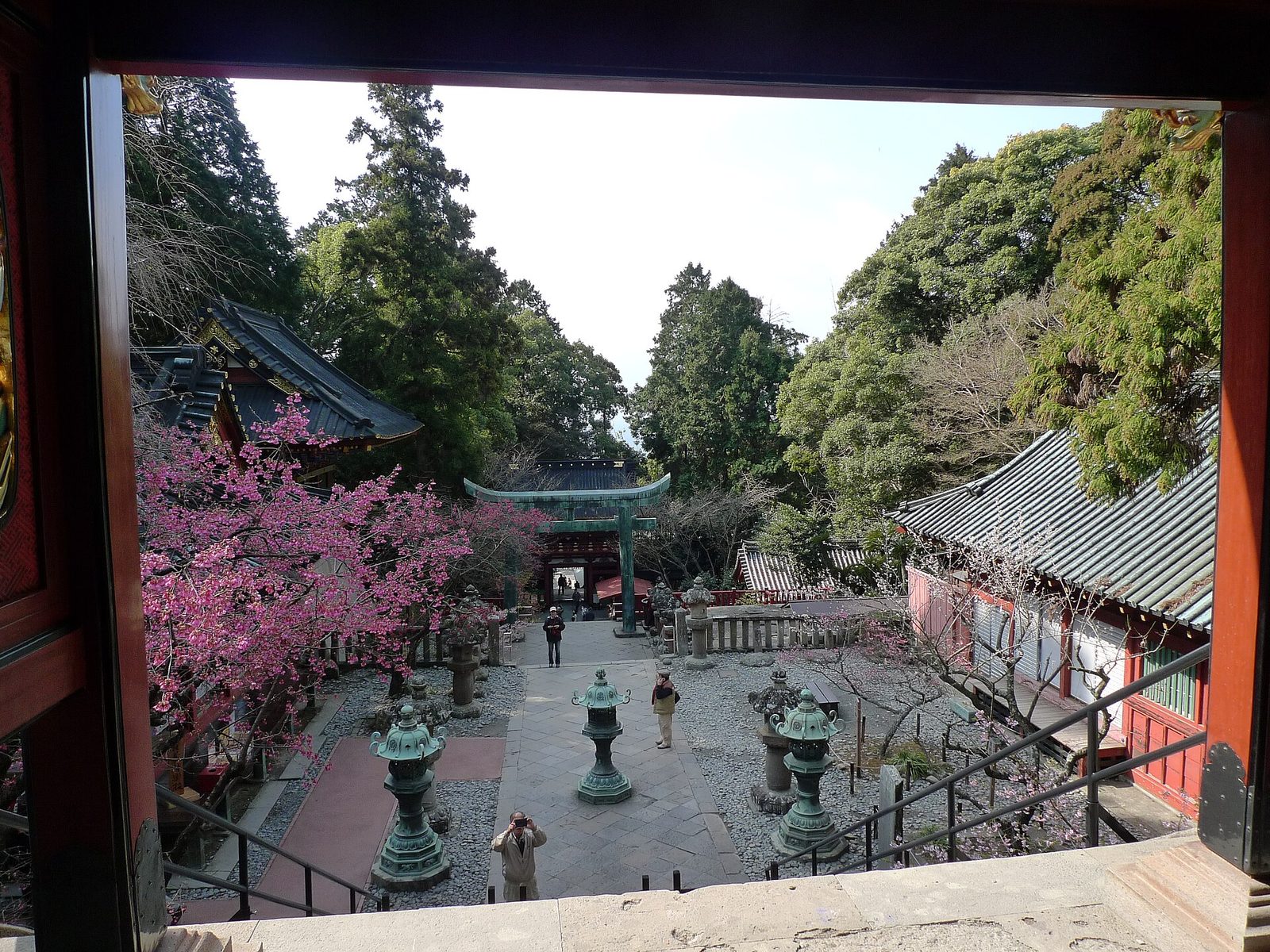
The original burial shrine of Tokugawa Ieyasu, the shogun who unified Japan — a National Treasure in carved lacquer and gold leaf on a mountainside above the strawberry coast. From Nihondaira it’s a 5-minute ropeway ride (¥1,250 round trip); the hardcore alternative is 1,159 stone steps up from the coast. Shrine ¥700, shrine + museum ¥1,200, 9:00–17:00, no closing days. The full plan — including how this beats the ship’s $100 bus tour — is in our Nihondaira & Kunozan guide.
16. Have Tea in a Hilltop Tea Field
Shizuoka grows roughly 40% of Japan’s tea, and at Zenkei no Chanoma on Nihondaira you can book a private terrace deck *inside a working tea field*, with a tea-and-sweets set and the Fuji panorama, for ¥3,000 per person (90-minute slots from 10:00; reserve at least 3 days ahead; outdoors, so weather applies). One caution from our fact-checking: the tea-*picking* experience at the nearby Nihondaira Ocha Kaikan is not running in 2026, so book the terrace, not the picking, and confirm when you reserve.
17. See the Ukiyo-e View from Satta Pass

The clifftop stretch of the old Tokaido road that Hiroshige painted in his *Fifty-Three Stations* — and the composition barely changed: Fuji above the sea, with the modern addition of the shinkansen threading beneath. Free, always open, strictly a clear-day pick. Reaching it is a 40–50 minute hike from Okitsu or Yui station (one and two JR stops from Shimizu), so this is one for longer port calls and comfortable shoes.
18. Train Into Shizuoka City: Sunpu Castle Park
Eleven minutes on the JR line puts you in Shizuoka city center, where Tokugawa Ieyasu spent his retirement. The castle park is free and always open; the reconstructed East Gate and Tatsumi Turret (¥200) and the Momijiyama Garden (¥150, or ¥360 for the all-buildings ticket) run 9:00–16:30, closed Mondays. Add the Toro archaeological site — 2,000-year-old reconstructed rice-farming village, also closed Mondays — if ancient history beats castles for you.
Seasonal and Situational (check the calendar)
19. Pick Ishigaki Strawberries on the Kuno Coast (roughly December–May)
The coastal strip below Kunozan Toshogu is lined with greenhouses growing “stone-wall strawberries,” a local method dating to the 1890s. All-you-can-eat picking runs winter through May — at Yamauchiya farm, weekends and holidays only, ¥3,300 adults in peak season, dropping as spring goes on; reserve ahead. A perfect add-on to #15 in the right season. Some farms open weekdays; check individually if your port day is midweek.
20. Catch a Shimizu S-Pulse Football Match
Shimizu is one of Japan’s true football towns, and if your port call lines up with a home match at IAI Stadium Nihondaira, go — Japanese football crowds are worth the trip alone. The league season runs August through late May (with a winter break, mid-December to late February). Match-day shuttles run from Shimizu Station (15 minutes, ¥500), and the club sells tickets through an official English-language site. Check the fixture list for your port date before committing the day.
Bonus Ideas for Repeat Visitors and Long Calls
- Seiken-ji Temple (Okitsu) — the Zen temple where the child Ieyasu studied; 500 rakan statues facing the sea. ¥300, 8:30–16:30. Pairs with Satta Pass (#17).
- Time your call to a festival — the Shimizu Minato Matsuri (early August) fills the streets by your pier with 10,000 kappore dancers and ends in a harbor fireworks show; the Tanabata festival decorates the Ginza arcades in early July.
- Push for Mt. Fuji itself — possible only on the longest port calls, and even then it’s really about the *views*. Tier-by-tier reality check: Mt. Fuji Day Trip from Shimizu Port.
- Debating a tour vs. DIY for any of the above? Our shore excursions comparison prices out all three options honestly.
Three Ready-Made Combinations
Classic first visit (5–6 hours): #6 early from the deck → taxi to #12/#13 Miho → water bus back → #10 tuna lunch → #1 souvenirs. Under ¥6,000 per person all-in.
Rainy day: #1 → #2 or #4 → #10 (the market is covered) → #11 arcades. Nobody goes home disappointed, and none of it depends on seeing a mountain.
History day (6+ hours): #14 → ropeway → #15 Kunozan → back via #19 strawberries in season, or train to #18 Sunpu Castle. Ieyasu from mountain shrine to retirement castle in one arc.
Frequently Asked Questions
Q: Can I really do this without booking a ship excursion?
For everything in the first two sections, emphatically yes — Shimizu is one of Japan’s easiest DIY cruise ports. For the half-day items, DIY works with light planning (a taxi and the ropeway replace the tour bus). The honest comparison of all options is in our excursions guide.
Q: My port day is a Wednesday. What do I do about the fish market?
The market buildings close, but Shimizu doesn’t stop serving tuna — the Sushi Alley restaurants in Dream Plaza (#1) run daily, and our market guide has a Wednesday backup plan.
Q: What if Mt. Fuji doesn’t show up?
Then you’re in good company — it hides often, especially on summer afternoons. Build your day so Fuji is the bonus, not the point: the shrine, the pines, the market, and the arcades all pass the “still a great day without the mountain” test. Items #3, #6, #8, #13, #14, and #17 are the ones that genuinely depend on the view.
Q: How many of these fit in one port call?
A typical 8-hour call comfortably fits one half-day item plus two or three port-area items. Resist the urge to chain three paid attractions; the walking, the harbor, and lunch *are* the experience. Build in a 30–40 minute return buffer, always.
*Last updated: July 2026. Hours, prices, and operating status are drawn from each facility’s official information as of mid-2026 and can change — the seasonal items especially. We have no commercial relationship with any business mentioned.*